Chapter 3: 12 Black Madonnas
12 Black Madonnas
*** This chapter was supposed to be published on Mothers Day but still requires some extra care and editing ***
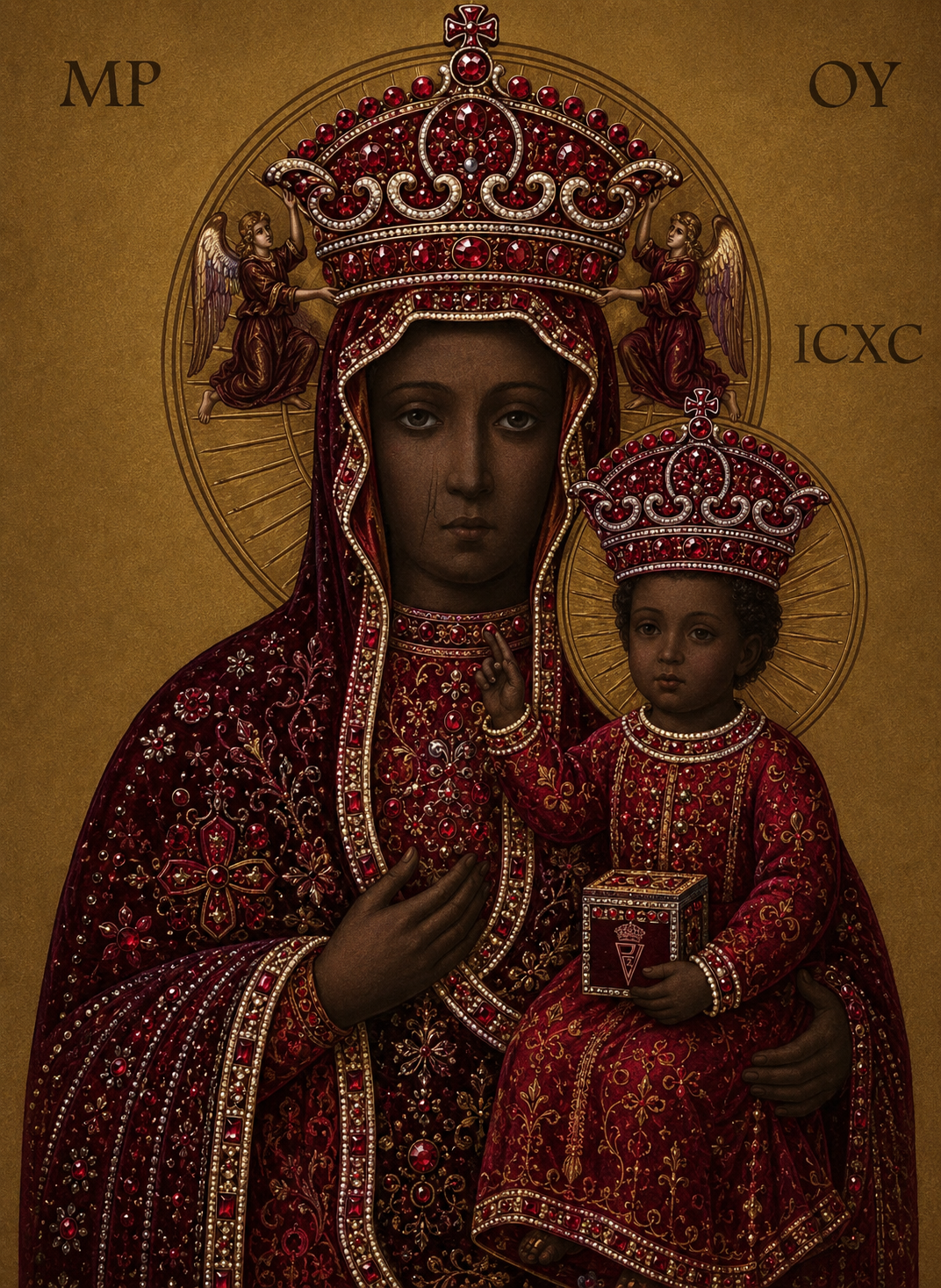
In the popular lexicon, Black Madonnas are "revered statues or paintings of the Virgin Mary and Infant Jesus with dark skin, found in Catholic and Orthodox traditions, notably the Black Madonna of Czestochowa in Poland. These icons, often dating from the 12th–15th centuries, are associated with miracles, fertility, and protection, with skin tones often attributed to candle smoke, aging materials, or symbolic representation." In other words Black Madonnas are viewed as an exception; depictions of Jesus' mother as a black woman in European countries, as opposed to the white Virgin Mary of the status quo. Mary was not European, nor was her son. Even the term "Middle Eastern" seems evasive of humanity's sub-Saharan African origins. It must have been jarring for enslaved women to hear the stories of the women in the Bible. Venerated for qualities they saw in themselves, breastfeeding, nurturing, preparing food, bathing children that were not theirs, with no reward. Watching their children sold away in slavery, often by their white fathers. Sometimes at live auctions. The Black Madonna to these women is not some abstract painting or accidental smoke residue, it is embodied. Black women in America were forced to pick up white women's slack. Teach their children about a world their white mothers were sheltered from, to no personal benefit to themselves.
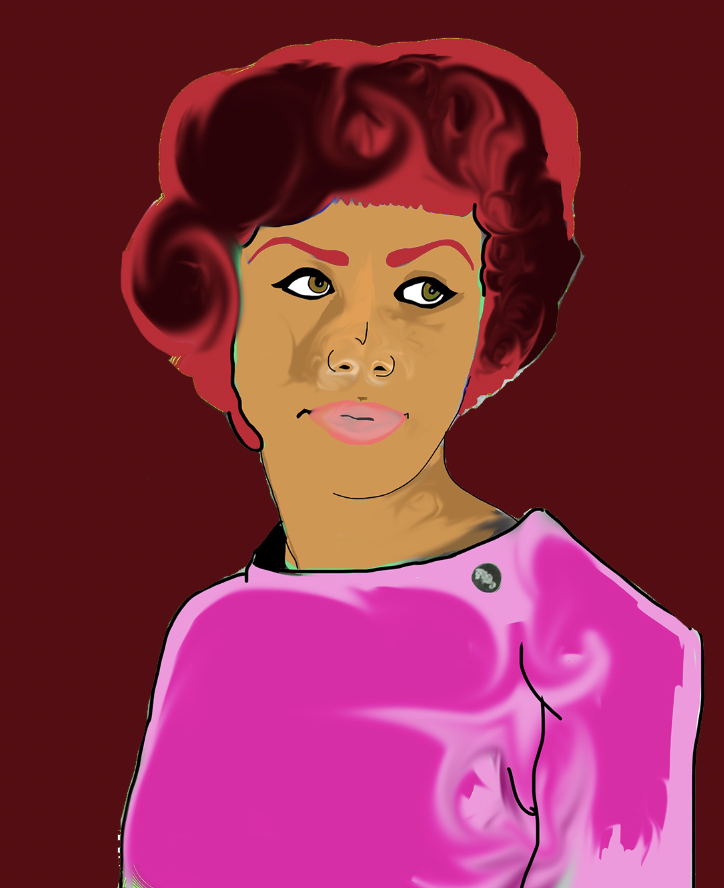
My maternal grandmother Antoinette Davis, art by me
My black mother, raised Catholic in Los Angeles, grew up obsessed with her mother. In fact we all did. Her mother, my grandmother, is extremely beautiful and intelligent — she graduated Valedictorian of her Fremont High School in Los Angeles — but perhaps her most noticeable quality is her grace and elegance. She has a regal air to her that has always inspired my mother and our household.
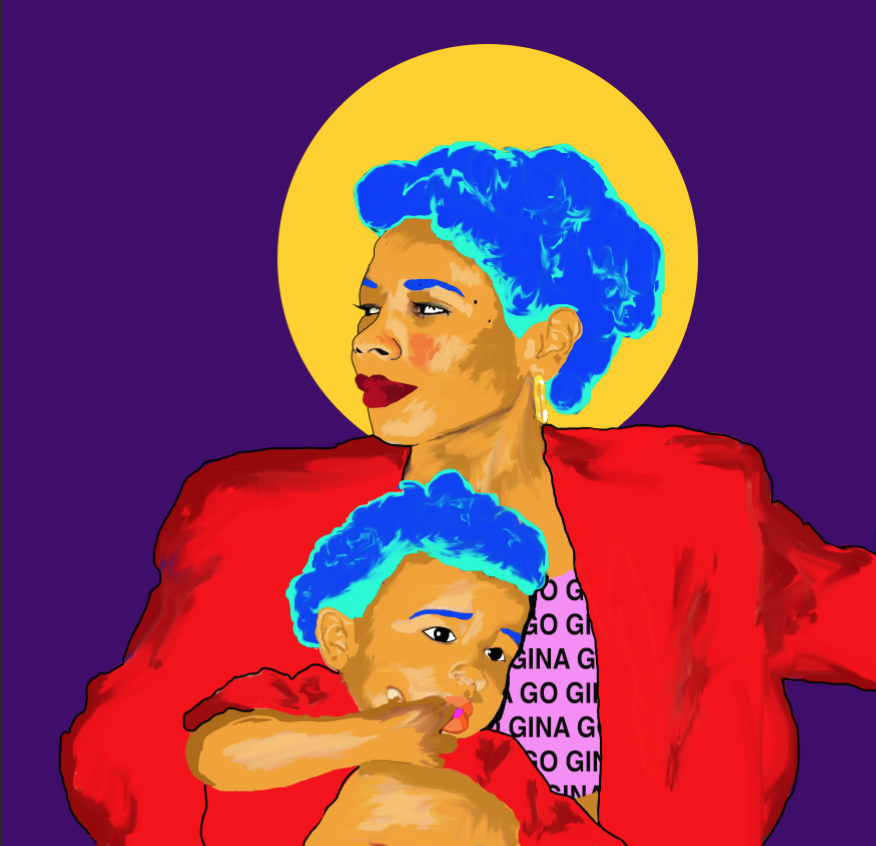
My mother and sister Jennifer. Art by me.
My mother is not related to the Carrolls but was raised Catholic. My father, from whom I get the Carroll name, was not. He was raised in the AME Zion church in Rochester, NY, where Frederick Douglass wrote the North Star and other newspapers in the basement. A direct theological liberatory response to Maryland Catholic slave holding, like the city of Rochester itself. My mother, like many people raised Catholic, sees herself as on a spiritual journey to find her own relationship with God, independent of the Church, but is influenced by the Church's pageantry, saints and rituals. As she grew into adulthood and bore five children (and raised even more), she became captivated — drawn to identify, to see herself in — the idea of the Black Madonna. She inherently felt more comfortable venerating a woman who had performed the miracle of birth despite the obstacles of oppression, the forces trying to kill her child, as opposed to the sickly white man most churches portrayed as Jesus. My mother was captivated by how giving birth could be an act of resistance in a universe of social death and oppression. To my mother, Jesus' mother had to have been a black woman. On the run, pushed out of society, a single mother whose co-parent was an absent mystery. Threatened by the empire. The Biblical Mary has a lot in common with the black descendants of slavery who give birth to black children in a world that wants to exploit and kill them.
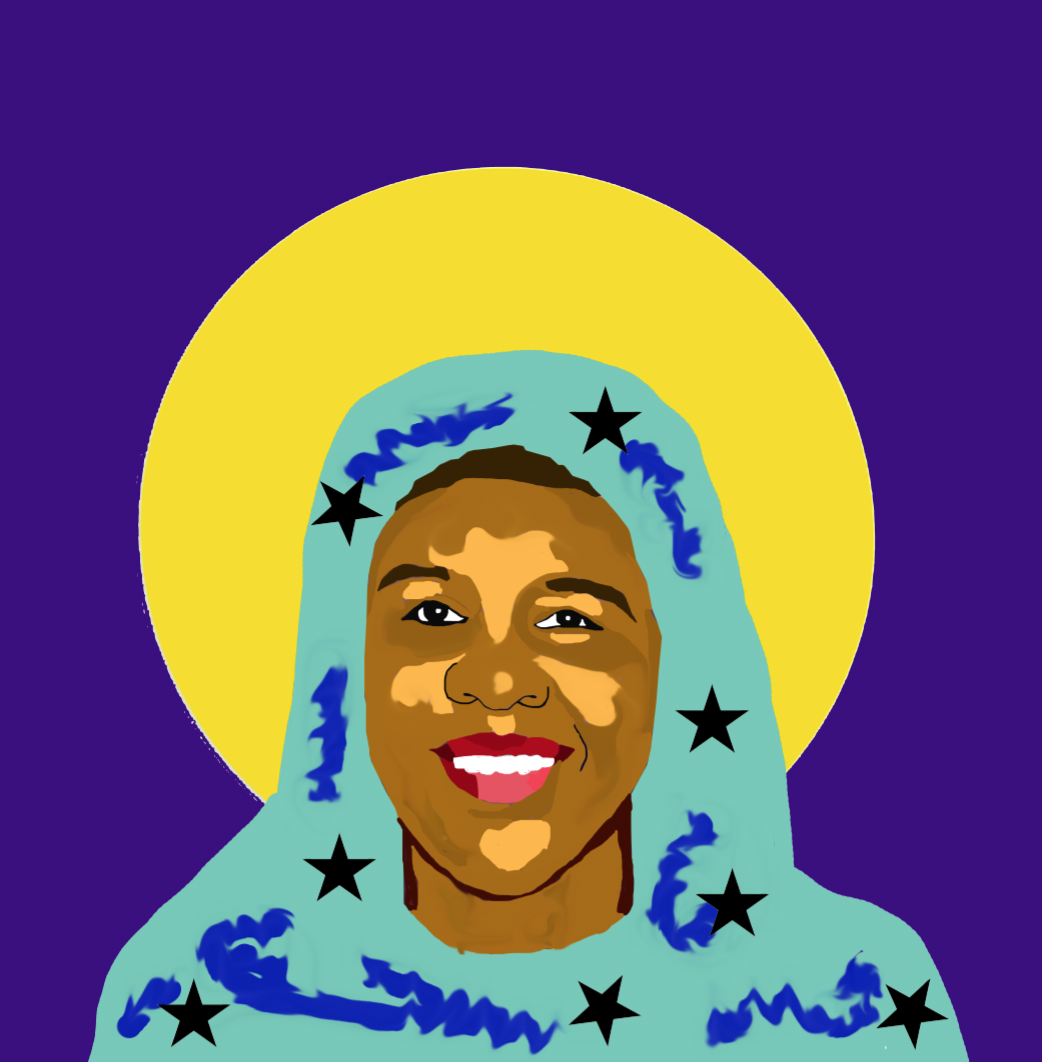
My paternal grandmother, Dr. Juanita Pitts. The first black woman with her own medical practice in Rochester, NY. Art by me.
This project started as a research project about my ancestor Rachel, a woman who gave birth to four children whose father remains unknown, and the patriarchal line of my father's family. Rachel gave birth to a boy she named Charles Carroll — in addition to James, William, and Caroline. Caroline Carroll, a kind of doubling down on the name by Rachel, would marry a man named Moses Shipley. I personally shifted to a focus on Moses because the reference is more recognizable and the overwhelming evidence that the name was more than just a name. I felt unqualified to write about the experience of black women in slavery, but could not tell this story without first grounding it in the women who gave birth to Moses in the first place. Like my mother, the Black women on the plantation who gave birth to children, especially those fathered by white enslavers, must have had a similar connection to the Virgin Mary.
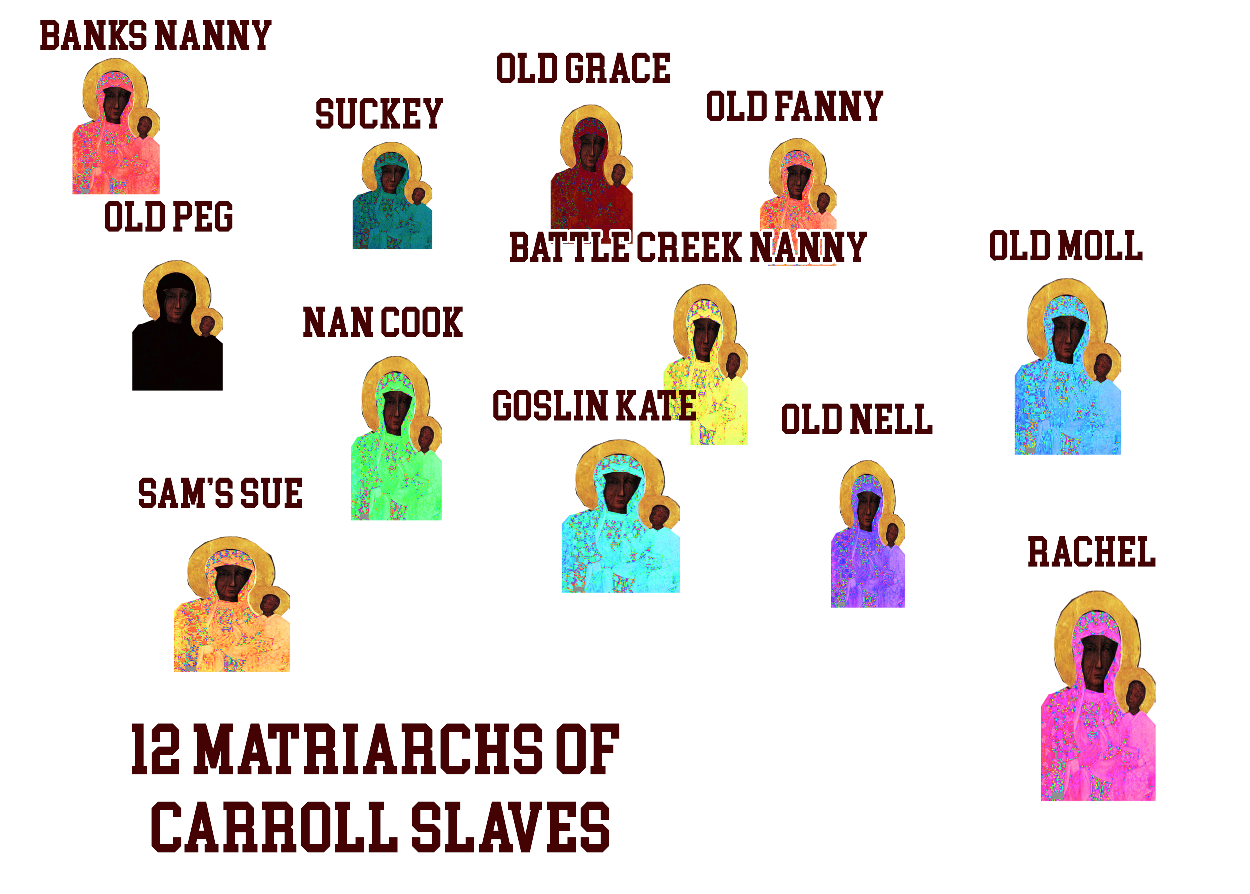
12 Black Madonnas Art by me.
Twelve enslaved black women gave birth to the majority of CCA's slave population in Maryland. Old Grace, Old Fanny, Rachel, Goslin Kate, Battle Creek Nanny, Banks Nanny, Old Moll, Suckey, Nan Cook, Old Peg, Old Nell, and Sam's Sue were names of these women. There is a sense that these names are the anglicization of the women's African names. The names of these women's children would go to symbolize which of the 12 they came from. Many men born to these women and their descendants would be named Moses, similar to how many women would be named Rachel. On the other side of the racial hierarchy, is the name Charles. If this story establishes the slave-trading Carrolls as pharaohs and villains of the Bible, re-embodied, then CCA is the archvillain, the super-pharaoh. It is hard to imagine that CCA populated his plantations with 12 black enslaved women and did not contemplate the 12 tribes of Israel. Whether he did or not, his grandson headed up the movement to send black Marylanders back to Africa. There was even a Maryland colony just south of Liberia, that was eventually folded into Liberia. But we'll talk about that later.
Though CCC is the family celebrity, CCA shaped the man who would shape our nation. CCA's dispassionate and profitable slavery operation anticipated the domestic slave trade, in the aftermath of the 1808 ban on the importation of enslaved Africans, though it never really stopped. With records pertaining to the Carrolls' use of slave labor before 1757 virtually non-existent, his activities in this regard can only be inferred from later developments. When it comes to the Carrolls, erasure of crucial slavery documents is the norm. But it is a combination of erasure and archive that is a downright confusing paradox. Despite this, we do know that by 1764, CCA owned 285 slaves, whose total value he placed at £8,550 sterling ($1.5M). During the life of Charles Carroll of Annapolis, the Catholic Church would no longer be the main enemy to the Protestant gentry in Maryland, and the Carrolls for a time were allowed to buy and sell African people in peace.
Charles Carroll of Annapolis, 1702–1782
CCA's personal home and property sat on the most prime Annapolis waterfront property, off Duke of Gloucester Street, and hosted Catholic Mass, since Catholics were allowed by law to only worship in private. When Carroll biographers say that CCA moved his father's assets into banking, they are talking about the money from slave trading. His father, CCS, acquired slaves in marriage prior to 1721, but this year is significant to historians because it was the year he and James Carroll, his nephew, and eventually CCA's cousin and mentor, began to verticalize their slavery operation. In 1721, CCS made a large and public middle-man deal in which he and James participated in the entire supply chain of kidnapped Africans. The two men bought 200 enslaved African people, probably with favorable terms with the despised and de-monopolized Royal Africa Company.
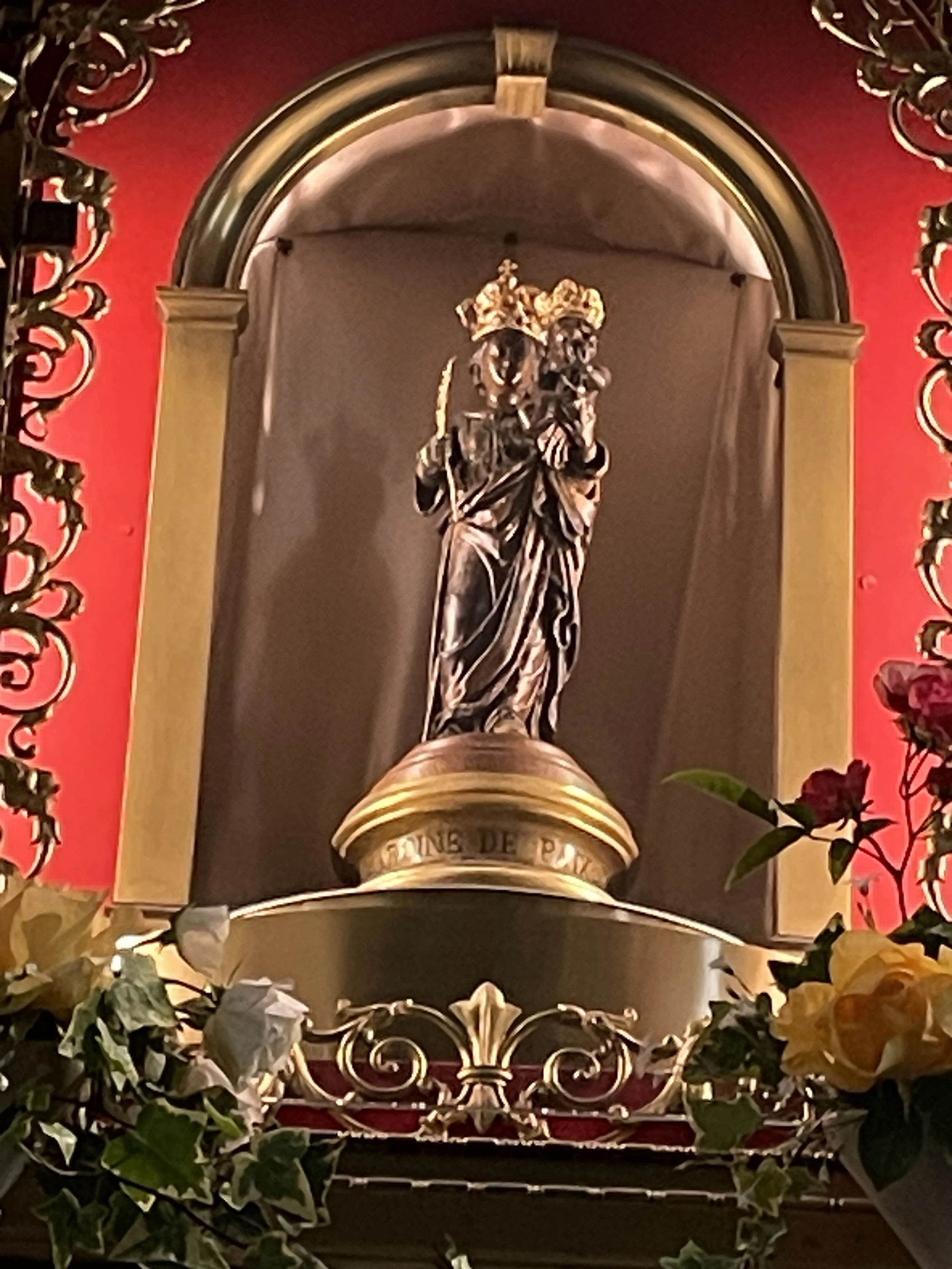
Notre-Dame de la Paix (Our Lady of Peace) in Picpus, Paris, France
James kept 6 slaves and CCS kept 2, but CCS died the next year leaving them to his son. His son, CCA, comes back home to Annapolis from Europe after news of his father's death and dives fully into his uncle's slave trading operation. James Carroll would become enormously wealthy through trading slaves and leasing them for credit. In addition, he created the foundations of Georgetown College through a chain of Jesuit-run farms in what is now Charles County, Maryland. James Carroll took full advantage of the declining monopoly of the African Royal Company. As the monopoly began to decline at the beginning of the 18th century, James Carroll would pick up his slave trading activities.
Most likely, James Carroll was getting steeply discounted slaves due to the dissolving Royal Africa Company monopoly, and he used them along with leasing land, that CCS was in control of distributing, to establish an empire of the enslaved upon which the United States would build its own empire.
In James Carroll's 1715 list of slaves, he heavily crosses out the names of enslaved people who died in transport, with "died" scribbled in the binding-side margins. James Carroll passed his capital-focused treatment to his younger cousin CCA. CCA shifted economic focus from his father's mercantile business, which he discontinued, to agriculture (slave labor) and banking (slave money).
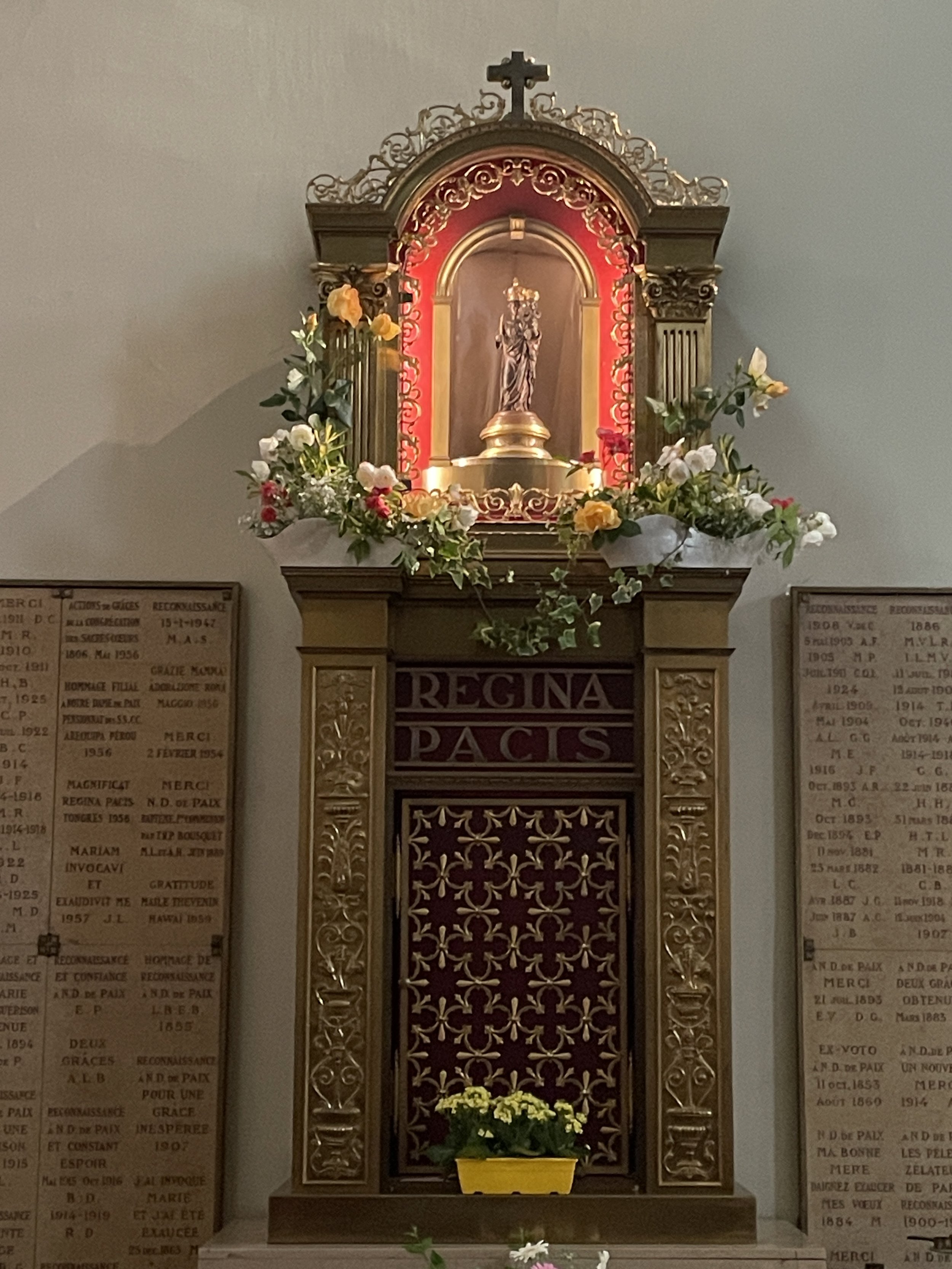
Wider view of the same image
The operation involved James Carroll hiring men to man a ship in England (Liverpool), the men sailing to Africa to load the ship with enslaved people, sailing it to the Caribbean to trade for more people, then to sail to Tulip Hill where the enslaved people were "fattened up," and then to Baltimore where the ship would be filled with tobacco, and then back to England to start all over again. James Carroll would pre-sell the enslaved people to Catholic laity, a practice that would evolve into a litigation strategy as enslaved people began to sue for their freedom at the end of the 18th century.
In addition to expanding his father's slave business, CCA also began an Iron Works business to make up for lagging tobacco margins. The Iron Works company required slave labor as well, and was notorious for poor treatment of black enslaved and free, and indentured whites, alike. There were many runaway ads, some featuring black and white escapees together from the Iron Works. The Carroll family owned a slave that many later-enslaved people were able to trace their ancestry to, named Lucy of the Ironworks. How she might have gotten that name, and what her responsibilities might have been, is a harrowing thought. Lucy of the Ironworks was born in 1692 and purchased by Charles Carroll the Settler in 1707 from a man named Daniel of St. Thomas Jennifer, evidence that Lucy was purchased from the British Caribbean, the main selling post for the Royal Africa Trading Company.
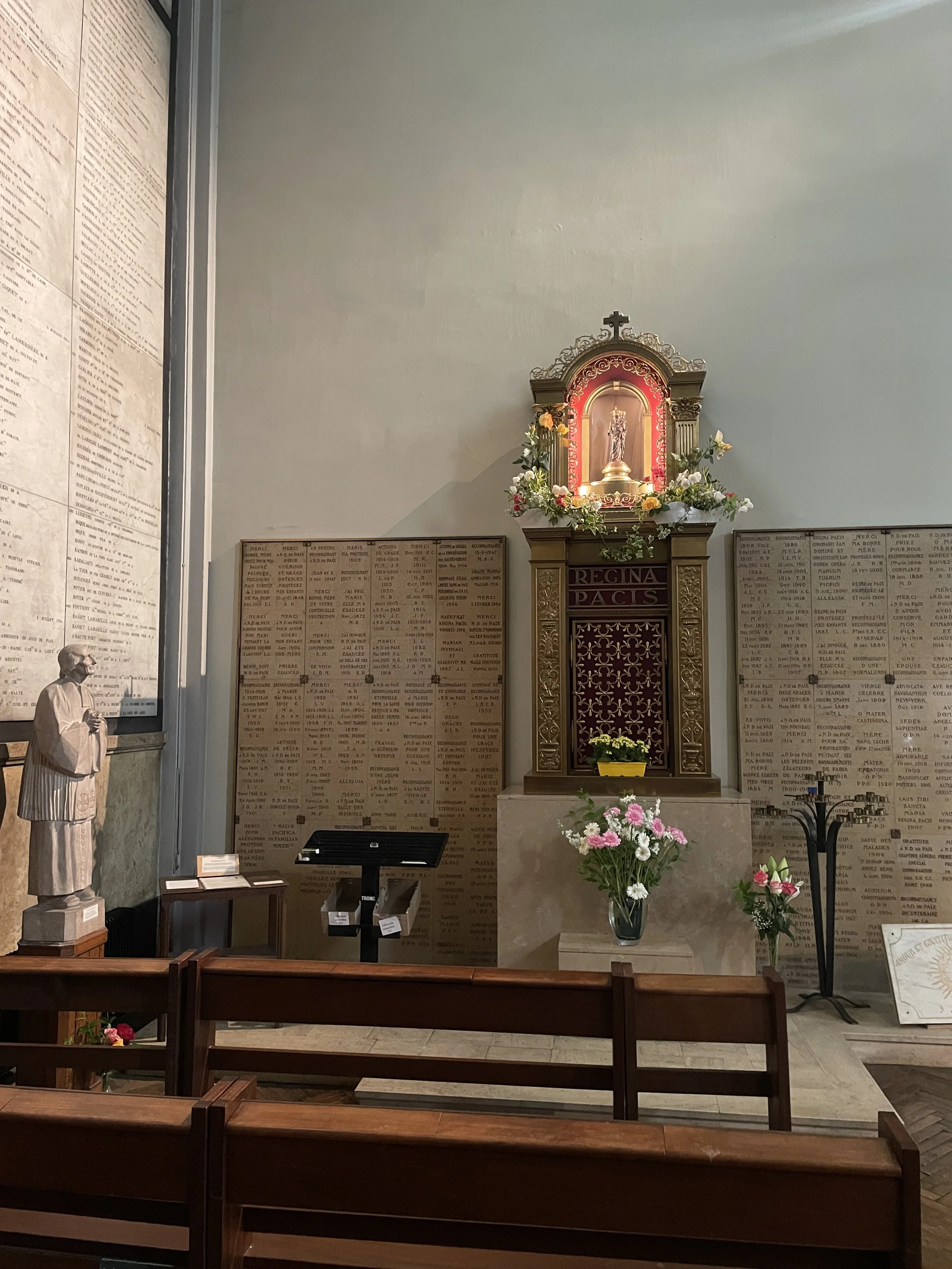
Wider view including Saint Jean-Marie Vianney. Famous priest Pope Benedict XVI proclaimed patron of all priests of the world during the Year for Priests in 2009.
In addition to Lucy, there were 12 other women specifically, who populated CCA's enslaved population with mulatto children and, mysteriously, no father.
The 12 Black Madonnas
The 12 women were discovered to be the source of the majority of the Carroll workforce by a Maryland researcher Daniel B. Dean, who himself has since disappeared from record. “With few exceptions, every slave identified by CCA is linked to one of the twelve matriarchal lines: those of Old Grace, Old Fanny, Rachel, Goslin Kate, Battle Creek Nanny, Banks Nanny, Old Moll, Suckey, Nan Cook, Old Peg, Old Nell, and Sam’s Sue.” The reason why 12 women were chosen to give birth to future generations of enslaved people is a mystery. So is who fathered the first generation of these children, most of whom are listed as yellow, mulatto, or colored, all indications their father was white. Lawsuits by the Queen family in the late 18th century implied that CCA and James Carroll were the fathers of at least some of these children.
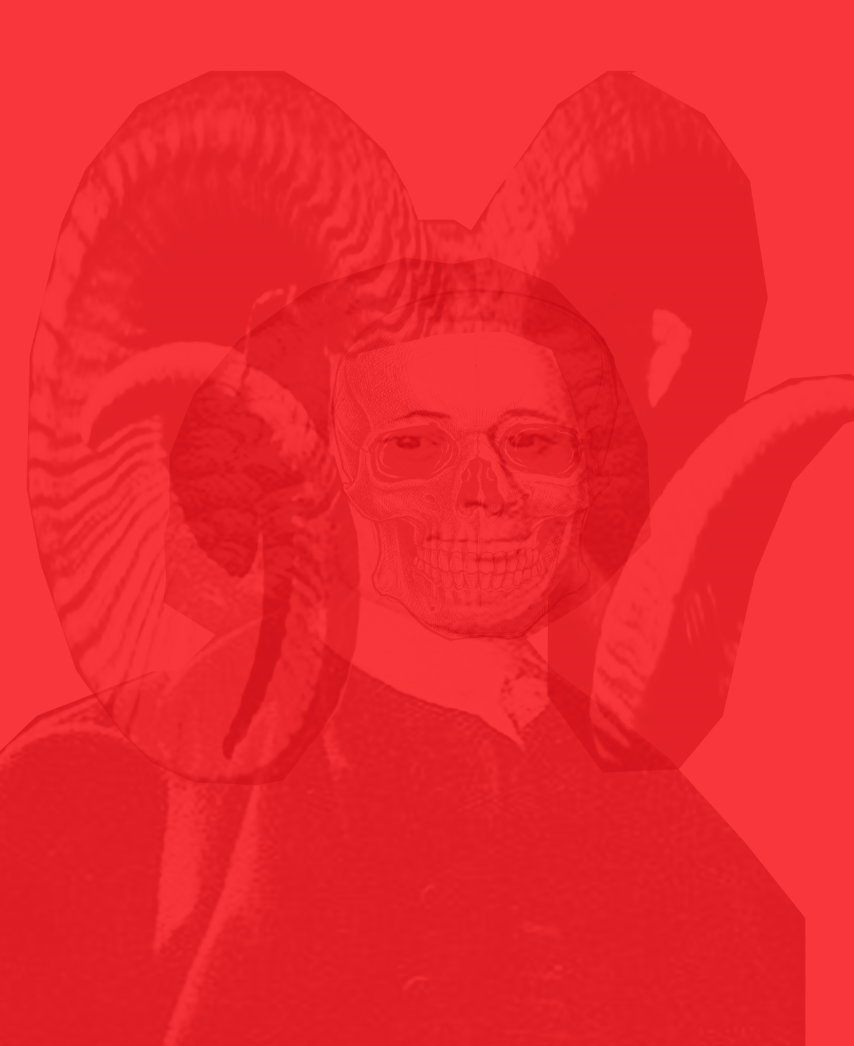
Charles Carroll Annapolis
But as CCA quickly learned, or had been counseled that, fathering children that could be counted as financial assets, and leveraged or sold as such, was only part of the profit-making scheme.
CCA's two main concerns were expanding his slave empire, and who would inherit it. To that end, CCA created tenants out of newly immigrated German and Irish farmers, and then leased them slaves to cultivate his land.
CCA’s two main concerns were expanding his slave empire, and who would inherit it. To that end, CCA created tenants out of newly immigrated German and Irish farmers, and then leased them slaves to cultivate his land.
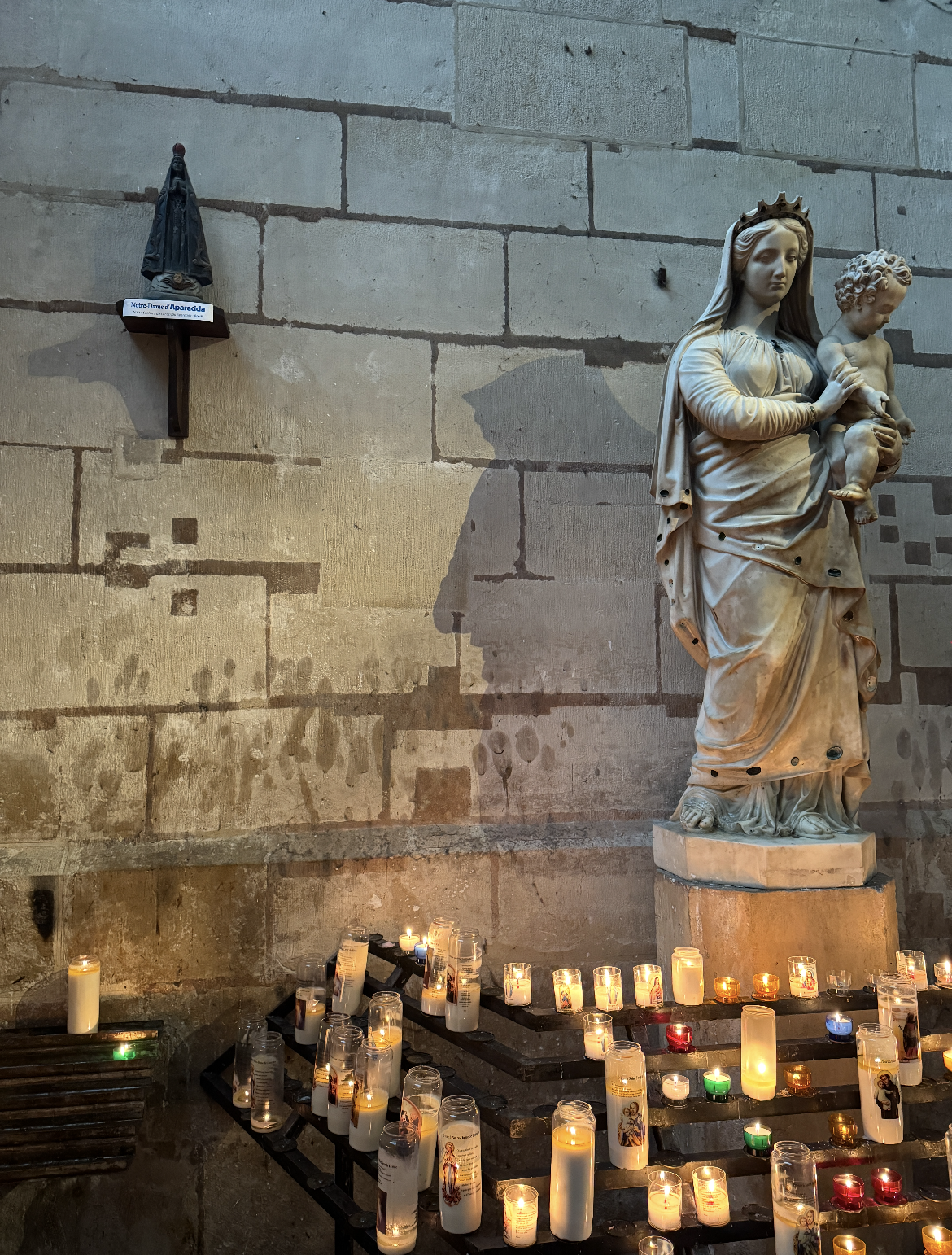
The Black Madonna of the Basilica of Saint-Denis
There were key differences in how the European immigrants were treated in contrast to the African enslaved, and the Carrolls systematically cultivated division between the two groups. For the Carrolls, who despised the lower class, poor whites were a threat, so having them exert violence against black people established class structures and guaranteed that the two groups would not join forces for resistance. In the 1730s, tenant farming became a major source of income and Catholic community building, but had been in the works by his cousin James since the 1660s when land had been put aside specifically for this purpose. CCA created a unique leasing agreement for the land he called Carrollton, now Fredericksburg, that required tenants to plant orchards and was unique in that it allowed an unlimited amount of working hands, which permitted tenants to have slaves. Carrollton was the exception to CCA's other tenant leases. On leases outside of Carrollton, he limited the potential workforce to wife, children and one additional laborer. This feels like a predecessor to redlining, as inevitably Carrollton had a higher black population, while his other lands were populated by German and Irish immigrants.
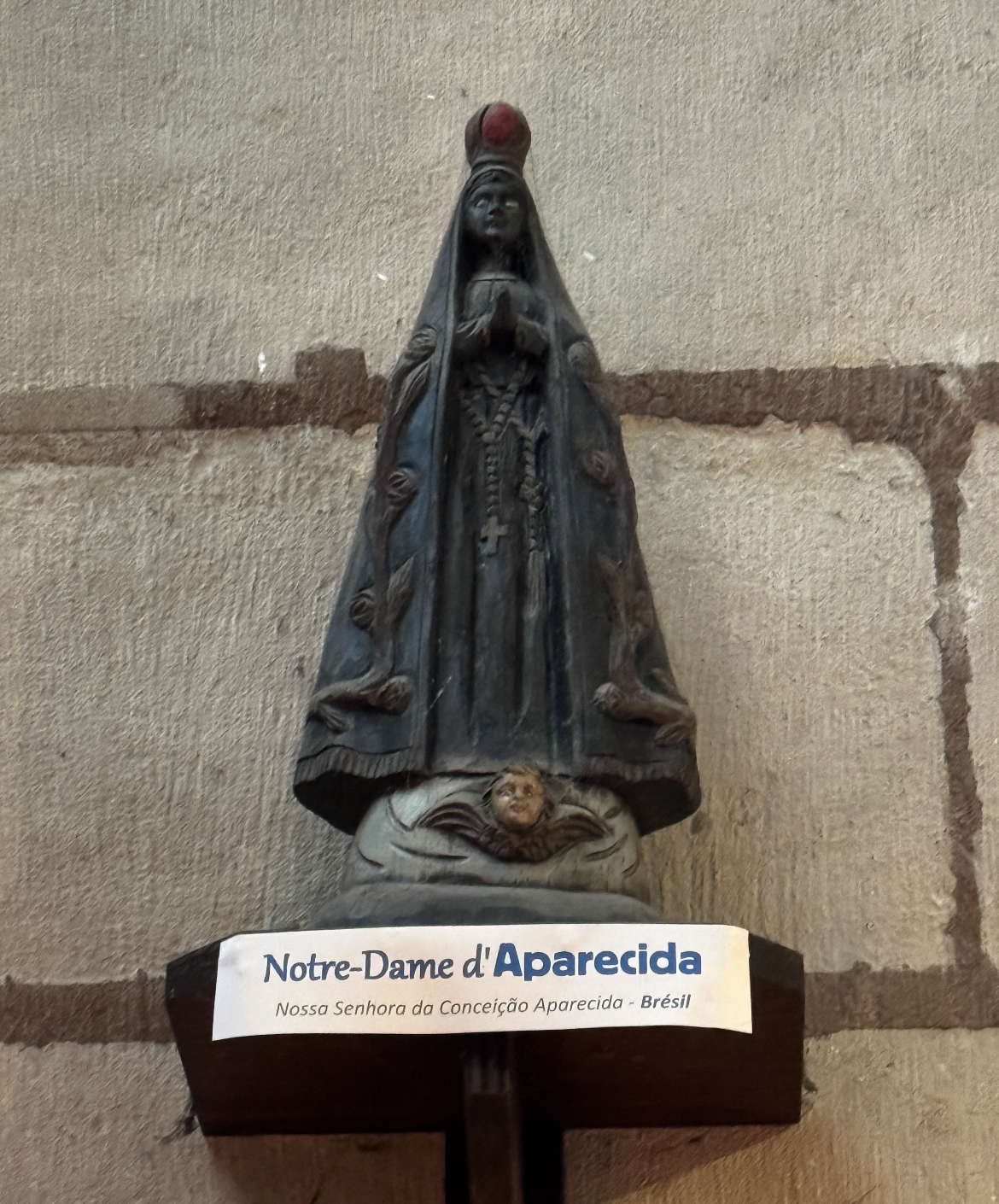
Notre-Dame d’Aparecida is the principal patroness of Brazil, revered as a Black Madonna. Found in 1717 by three struggling fishermen in the Paraíba River, the small terracotta statue is now enshrined in the Basilica of the National Shrine of Our Lady Aparecida. Located in Aparecida, São Paulo, it is the largest Catholic cathedral globally, attracting roughly 10 million pilgrims annually. Her feast day is October 12, a major national holiday in Brazil.
The tenant lands where enslaved people were not allowed were the equivalent of the suburbs. The land where tenants were allowed to keep large populations of enslaved black people were the equivalent of the inner city. "Notwithstanding his unabashedly self-interested approach, Carroll never lacked for tenants, both because of the quality of the land offered and his aggressive recruiting." Through printed and written advertisements and long letters sent locally and throughout Europe, CCA successfully attracted tenants willing to sign on.
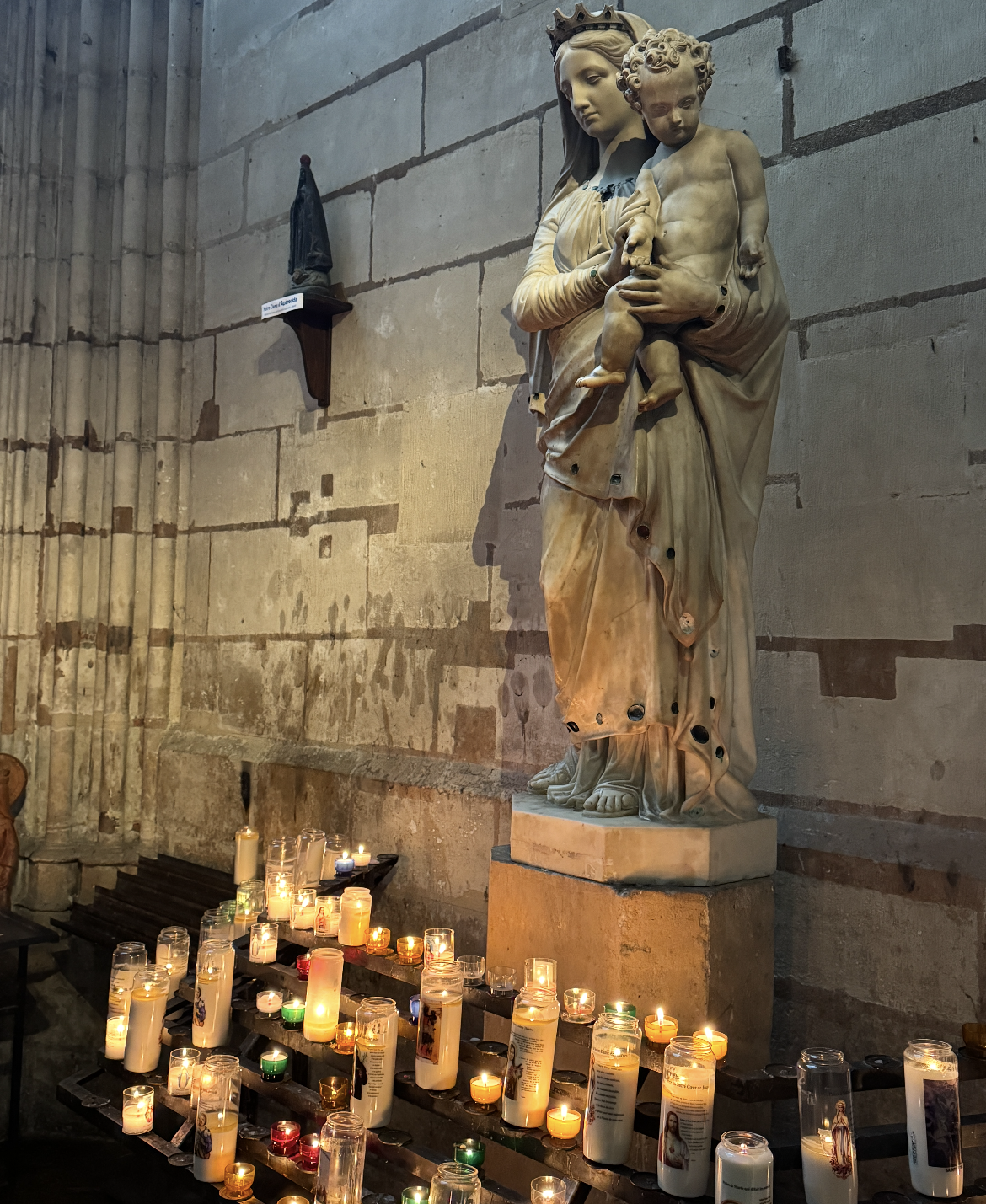
The Marian Chapel at the Basilica of Saint-Denis, Paris, France
The encouragement given to Europeans — particularly Irishmen, Englishmen and Germans — to immigrate to Maryland and become landowners was the ideological opposite of the social death waiting for the enslaved black people who were brought to the same land. And though many of the European immigrants were drawn to Maryland for religious freedom and economic opportunity, the enslaved Africans brought to Maryland would be denied both. Despite this, enslaved people created a rich combination of Abrahamic religions and conjure. The two were defined by the differences between religion and magic. Religion was important, particularly Christianity, for enslaved people, but conjure picked up where Christianity left off, and could be used to address the hypocrisies in White Christianity. In reality conjure complemented Abrahamic religions, perhaps even reinvigorated them with aspects lost in translation from their African origins. On Carroll plantations, where naming was already a highly valued tool of the white Carroll family, the Carroll family's naming practices, like their practice of Catholicism, were not merely subverted by the enslaved and made their own — they were practicing unacknowledged African traditions. For the people enslaved by the Carrolls, a white Charles Carroll symbolized the Egyptian pharaohs of the Torah, Bible and Qur'an, and any credible practitioner of black magic among them, Moses.
Rachel (1721- ????)

Black Family Tree, including multiple Rachels, and my family according to lore.
She was about five feet tall. Yellow complexion. No perceptible mark.
That is how the Anne Arundel County Court described Rachel Hart Carroll in her manumission papers, issued April 17, 1832. The clerk recorded her skin color without recording why it was that color. "Yellow complexion" was the archive's cold notation for what the family tree confirms with three question marks where her children's father should be. The clerk described what he saw. He did not say what had been done.
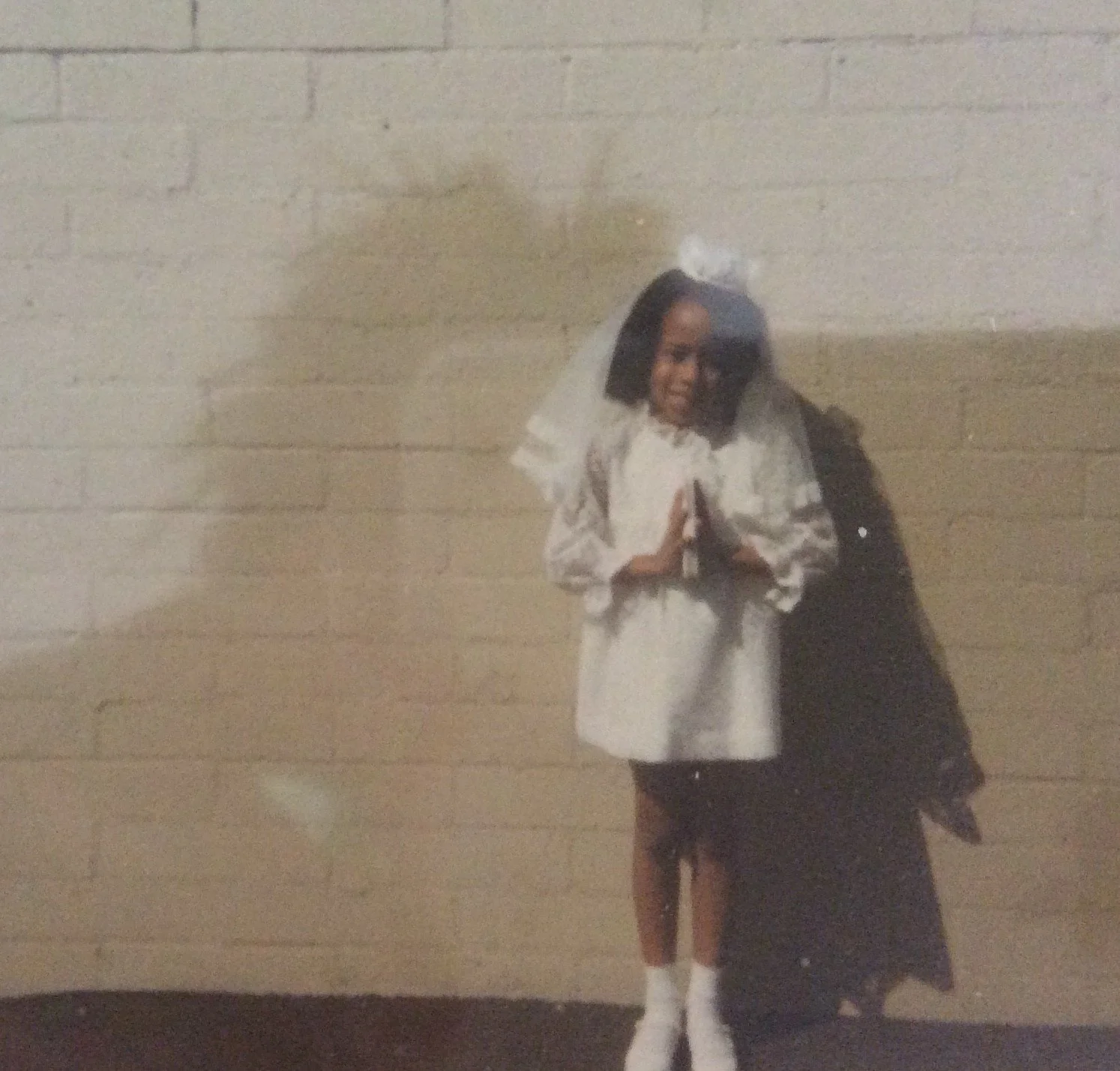
My mother Gina at First Holy Communion at St. Albert’s the Great in Compton, CA.
"Has no perceptible mark" — in the same era that Charles Carroll of Homewood had an enslaved woman named Charity Castle branded on her breast, Rachel's body bore no visible mark of Carroll ownership. The chapter on CCH details how Charity was branded. Rachel was not. The archive records both women as property. Only one was written onto like livestock.
"Raised in the County aforesaid." Rachel did not arrive from somewhere. She was born and grown in Anne Arundel County, on Carroll land, her entire life within the Carroll system.
My family is full of naming traditions. The newest is J names. All of my father's siblings have J names: Juanita Elizabeth Carroll, Julian Orlando Carroll, Jeffrey Carroll, Jacqueline Carroll, Jonathan Pitts Carroll and Jocelyn Carroll. And those children named their children all J names: Joel Norman, Jason Norman, Jonathan Pitts Carroll 2, Jillian Carroll, Jasmine Norman, Jordan Carroll, Justin Adams, Jennifer Carroll, Jessica Carroll, Jackson Carroll. And then those children had babies: Julianna, Judah. My family lore was that we were related to a woman named Rachel Hart who bore children with Charles Carroll of Carrollton. When I began researching, I found that Rachel Hart was one of many Rachels in the enslaved community of the Carrolls.
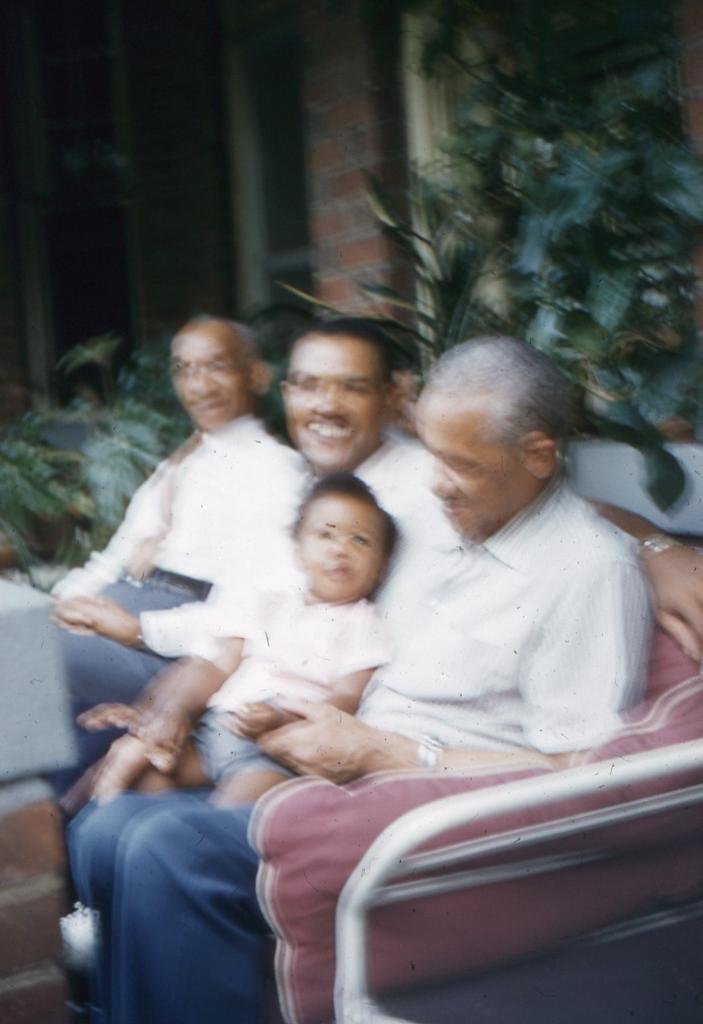
Julian Orlando I, II, and III all pictured together.
In the Bible, Rachel is the matriarch of the 12 tribes of Israel. She is not the sole central matriarch, but she is often considered the most emotionally central figure in Jewish tradition. She is one of the Four Matriarchs (Imahot) — alongside Sarah, Rebecca, and Leah — who are collectively viewed as the foundational mothers of the Jewish people. Rachel is the only matriarch affectionately called "Mother Rachel" by the entire nation. She is the Intercessor: in the book of Jeremiah 31:15-17, Rachel is depicted crying for her children as they are led into exile. God promises to reward her tears by returning the Jewish people to their land.
The name Rachel would have been especially significant to CCC. Once acknowledged by the Carroll family, he was likely raised by black women named Rachel. His first love and fiancée was named Rachel. His aunt, his mother's sister, was also his mother-in-law. Yes, that is correct, and I will explain it later.
On November 1, 1766, Charles Carroll of Carrollton was issued a marriage license for Rachel Cooke. Twenty-four days later, she was dead. He wrote to Mr. Digges on November 28: "I have had ye great misfortune to lose Miss Cooke: she died ye 25th Instant — you who were well acquainted with her must be sensible how great a loss I sustained: I assure you I feel all ye weight of it." CCC's grief for the white Rachel is documented in his own handwriting, in his own words, sent across the ocean. His relationship to every Rachel on his plantation, including Rachel Hart, whose children and increase he would later bequeath as property, is unrecorded. Both facts live in the same archive. Both silences speak.
Rachel Carroll and Rachel Hart may not be the same person. But the way family lore flattens them tells its own story. Who was this woman who named herself Rachel Carroll and mothered these four children with a mysterious man, whose identity is hidden from record. Who is the father of Rachel Hart’s children, the black woman so close to CCC, present at his death. We know Rachel Hart is given as property to Emily McTavish. But this is the crazy, even though Rachel Carroll was manumitted by Mary Meriweather, someone who we do not know has a direct connection to the Carroll family. Rachel Carroll’s daughter Emma marries Moses Shipley, a man who we will cover later in Chapter 9, but prior to his emancipation was owned by a Charles Carroll McTavish, Emily Mc Tavish’s son.
According to Carroll historian Mary Jeske, women named Rachel had a special place in CCC's heart and a special status on his plantations.
In researching this story I met instant resistance. Charles Carroll of Carrollton wouldn't do that — maybe it was his son CC of Homewood? Are you sure it wasn't someone from this family? Are you sure it wasn't another Charles Carroll — there were also poor white Carrolls? "The Carroll family is mostly concerned you are not after money," said another. What this resistance told me was not that the connection was impossible. It was that it was inconvenient. The difference between those two things is the difference between history and mythology.
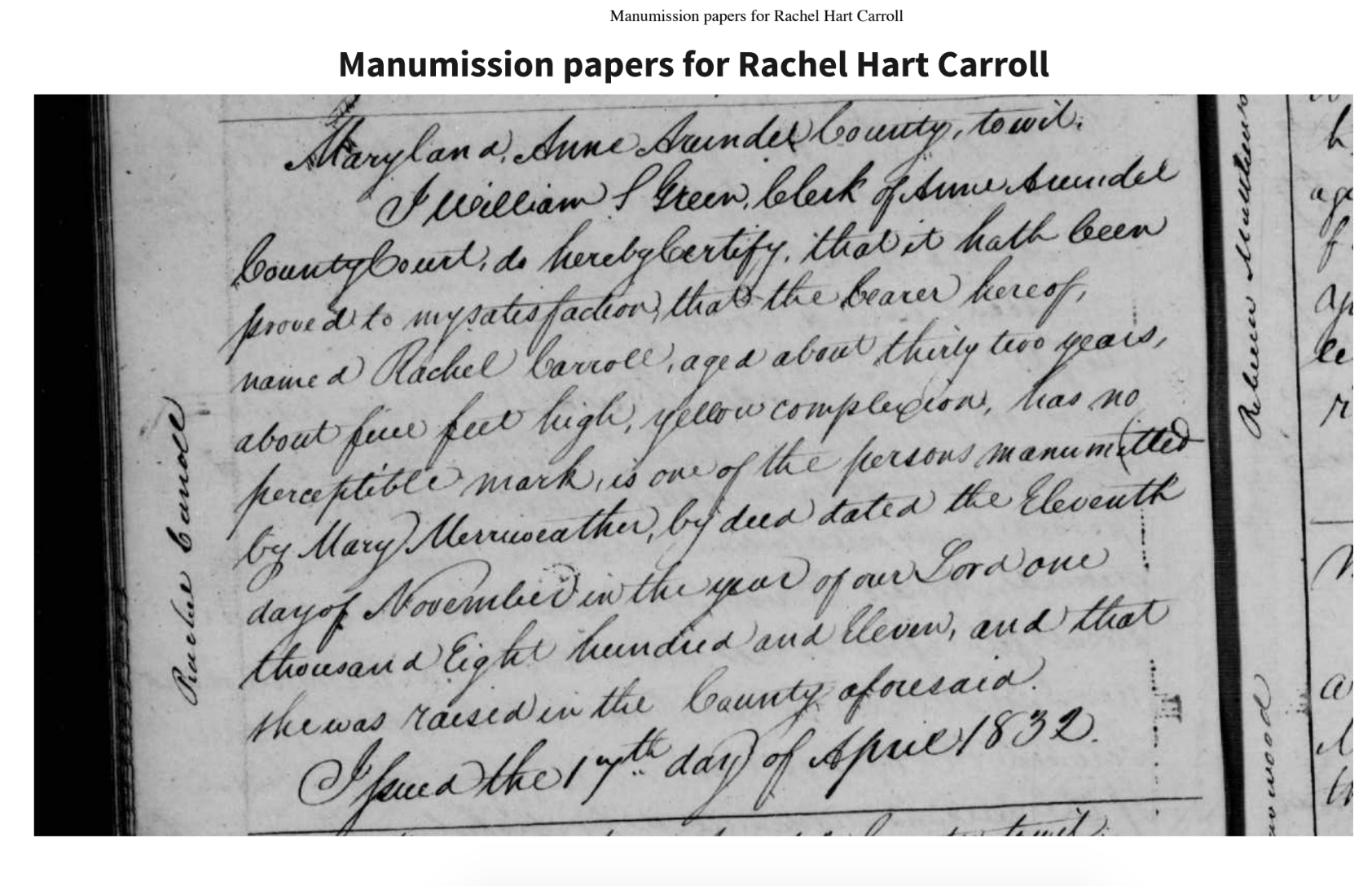
Manumission papers for Rachel Carroll. Is she the same woman as Rachel Hart in CCC will?
The family tree shows that the name Rachel was passed down from the original Rachel (b. 1721, one of the 12) across generations: Rachel to Sall, to Yellow Harry, to Henny, to Flavia, to Rachel Hart (b. 1795). The name Rachel was carried forward matrilineally even when the archive recorded no father beside the women who bore it. The enslaved community was naming the daughters Rachel the way they named the sons Moses — calling on the ancestor, calling the spirit forward, insisting on continuity the law could not sever.
Rachel Hart was freed by Mary Meriwether by deed dated November 11, 1811 — over twenty years before the manumission was certified by the court. Mary Meriwether was the wife of a Carroll family connection, and her act of manumission was real and legal. But it existed in the same world as CCC's will.
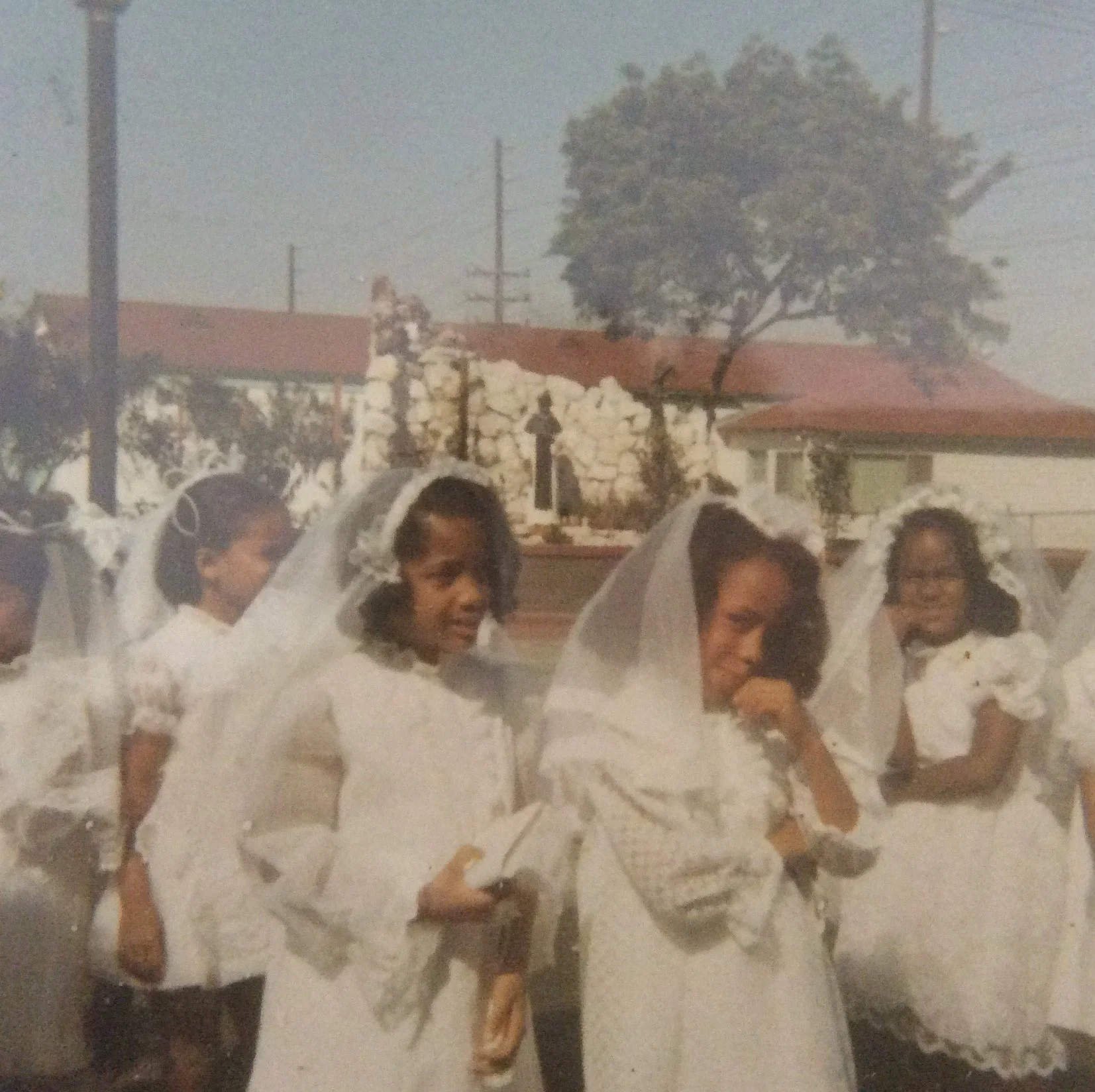
Gina at 1st Communion
CCC's will, in its 6th codicil, explicitly bequeaths "Rachel Hart and her children and increase" to his granddaughter Emily McTavish. The word "increase" is legal language meaning any future children Rachel might bear — all of them, born or unborn, property. Rachel was freed on paper in 1811. CCC's will, written before his death in 1832, still listed her and her children as property to be passed down. Either the Carroll estate did not recognize the manumission, or her children were considered separately enumerable even after her own freedom. The legal question does not resolve cleanly. That is the point. She was freed on paper and bequeathed in a will, and both documents exist, and both are real, and both describe the same woman.
And look at what appears in that same codicil, on the same page, in the same breath as Rachel's name: Moses (Jo's son) Wheelwright. Moses and Rachel are bequeathed together, in the same clause, to the same granddaughters. The peer relationship I have been building toward is not inference. It is primary source. It is CCC's own will.
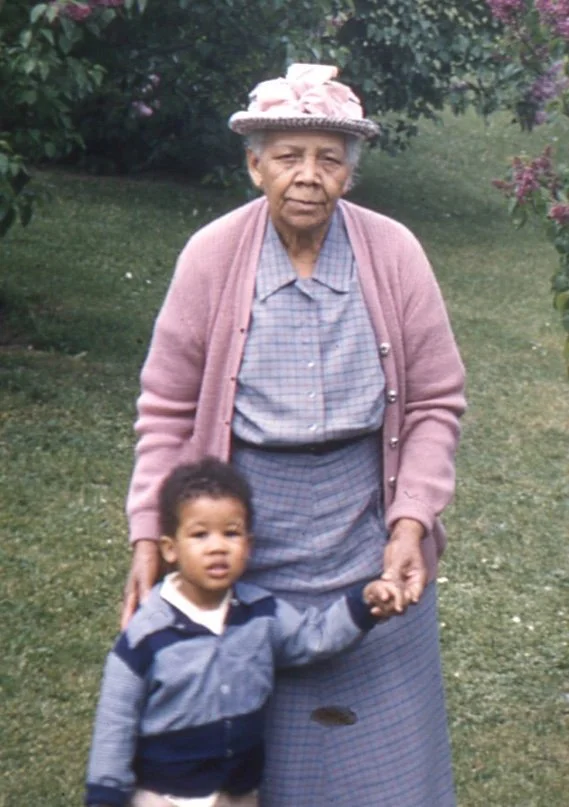
My paternal great great grandmother Lula Pitts. The paternal grandmother of my paternal grandmother.
Rachel gave birth to four children: Caroline (b. 1815), James (b. 1824), William H. (b. 1833), and Charles (b. 1844). All of these names common on Carroll Plantation. Caroline Carroll, a kind of doubling down on the name by Rachel, would marry a man named Moses Shipley. James fought in the Civil War. Rachel's sons William and Charles were gifted property and founded a United Methodist Church — a direct theological heir to the liberatory tradition that had always existed beneath the Carroll Catholic empire, now made visible in Rachel's own children's hands.
Every child Rachel bore after 1811 was born to a legally free woman. Caroline, James, William, Charles — all born free, all bequeathed as property in a dead man's will, all tracked and located by an estate that could not let go of what it had already released.
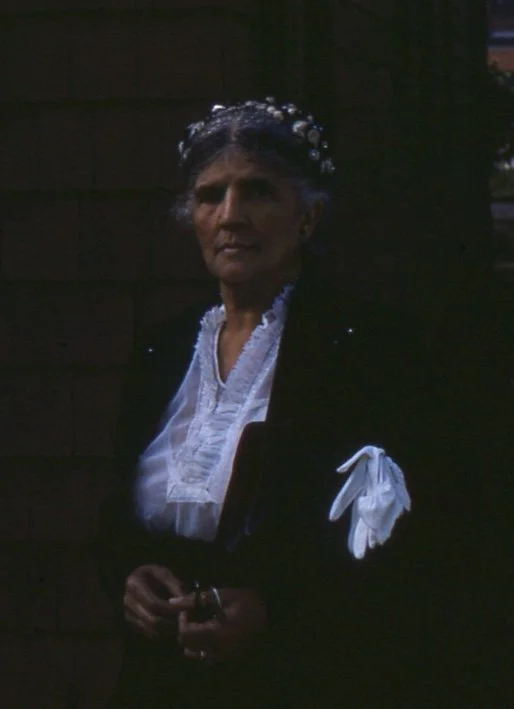
Fanny Page, Julian Orlando Carroll I’s wife. My great-grandmother, mother of my grandfather.
The 1833 slave appraisal contains a note: "Rachel Hart was in town at the time of the deceased's death but was on the Manor at the time of the appraisement, and shown to the appraisers on the 1st April 1833." Rachel was not at Doughoregan when CCC died. She was somewhere else. In town. Baltimore, Annapolis — the archive does not say. The estate tracked her location, found her, and brought her back to the Manor. She was appraised at $25. The lowest valuation on the entire Doughoregan list. Moses Addison, a 20-year-old wheelwright, was valued at $500. Paul Beal's son, a blacksmith, $500. Rachel Hart, 39 years old, freed for over twenty years: $25. Either she was ill, or the $25 was a contested valuation of a woman the estate was listing against the terms of her own freedom papers. The archive freed her and refused to let her go. It valued her at twenty-five dollars and sent someone to find her.
The father of Rachel's children is not absent from her life. He is absent from the record. Those are different things, and the chapter will not pretend otherwise.
Moses the Maker
One of the original Rachel’s peers was likely an important enslaved man named Moses. The name Moses is conspicuous in the CCA’s writing. In 1773 Moses is listed as an ‘overseeing’ enslaved person of a housing unit With Sukey and Sam listed as the other enslaved person managing enslaved persons, we can assume that Moses was also a peer of the 12 women and may have fathered children with one of them. In other words the first Moses had status and responsibility. It is unclear whether, on Carroll plantation, the first enslaved man named Moses was named by a white Charles Carroll.
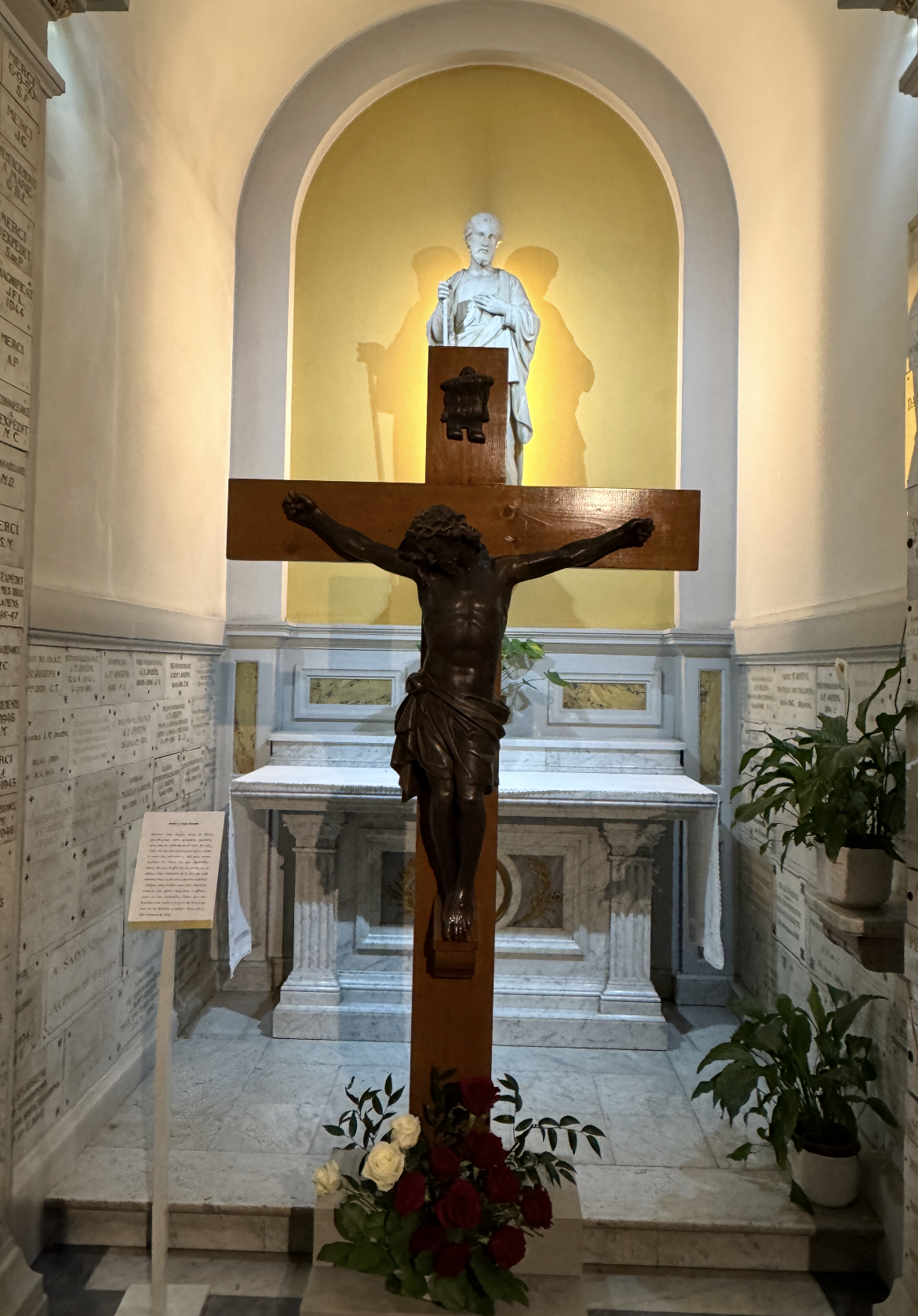
Black Jesus, flanked by white Joseph, at Notre-Dame de Bonne Délivrance in Paris, FR
CCA seemed to openly court racial contradictions in his life, but left a highly censored record in his letters.
The primary source of particular interest to historians have been the letters between CCA and his son CCC. CCC is the celebrity of the family because of his association with the signers of the Declaration of Independence. The letters between the two have been mined for any reference to Benjamin Franklin, Thomas Jefferson, Alexander Hamilton, John Adams, and the Revolutions’ white male heroes, but the normalized cruelty of the Carroll’s vast human trafficking operation is barely mentioned. It is in these letters that we find the most details about the enslaved people’s personalities. Unfortunately, we have to take these details from the testimonies and communication between two men who seemingly made no consideration for the humanity of the black people who they enslaved. It is in these letters that we also find the earliest evidence of an enslaved person named Moses. The names of enslaved people can be found in wills and “slave lists.” But the letters add more details about what Moses’ responsibilities might have been, who he was to his family and what his life may have been like. The Carrolls enslaved black men named Moses since at least the mid-18th century. Moses is the slave most mentioned by CCA in his letters to CCC in the years just prior to the Revolution. This Moses is an overseer, a prolific tobacco planter and one of, if not the most, valued enslaved persons of CCA.
“The woods have recovered their foliage: The Wheat & Rye I think looks well. Moses has planted 10,000 tobacco plants. I like Flattery's conduct, he carries on business regularly, & I think with expedition.”
What does it mean to plant 10,000 tobacco plants? The number implies that maybe Moses oversaw a team of enslaved people, or had superhuman abilities. CCC’s reference to a white Irish Flattery carrying on his work with “expedition” in reference to Moses, implies that Moses’ output was a combination of Moses’ ability and Flattery’s demanding oversight. It hints to CCA’s dismissal and detachment to the plight of the black enslaved, combined with an enthusiasm for the benefits gained from his white employee’s cruelty. But in contrast to Moses' characterization as an unskilled brute in need of Flattery’s ‘expedition,’ Moses is also given highly skilled tasks such as surveying a wall on the Annapolis property that prevented Carroll Creek, now Spa Creek, from overtaking the Annapolis houses' Southern gardens. “Moses, who brought down the Steer will give you a better account of the Stonewall than I can by letter- I told him to survey & observe it attentively, to measure it, & give you a full & distinct description on his return.” Moses’ ability to measure and describe skillfully a construction project implies several skills not associated with manual labor assigned to black enslaved people. Moses did not just mindlessly haul tobacco, Moses had architectural and project management skills.
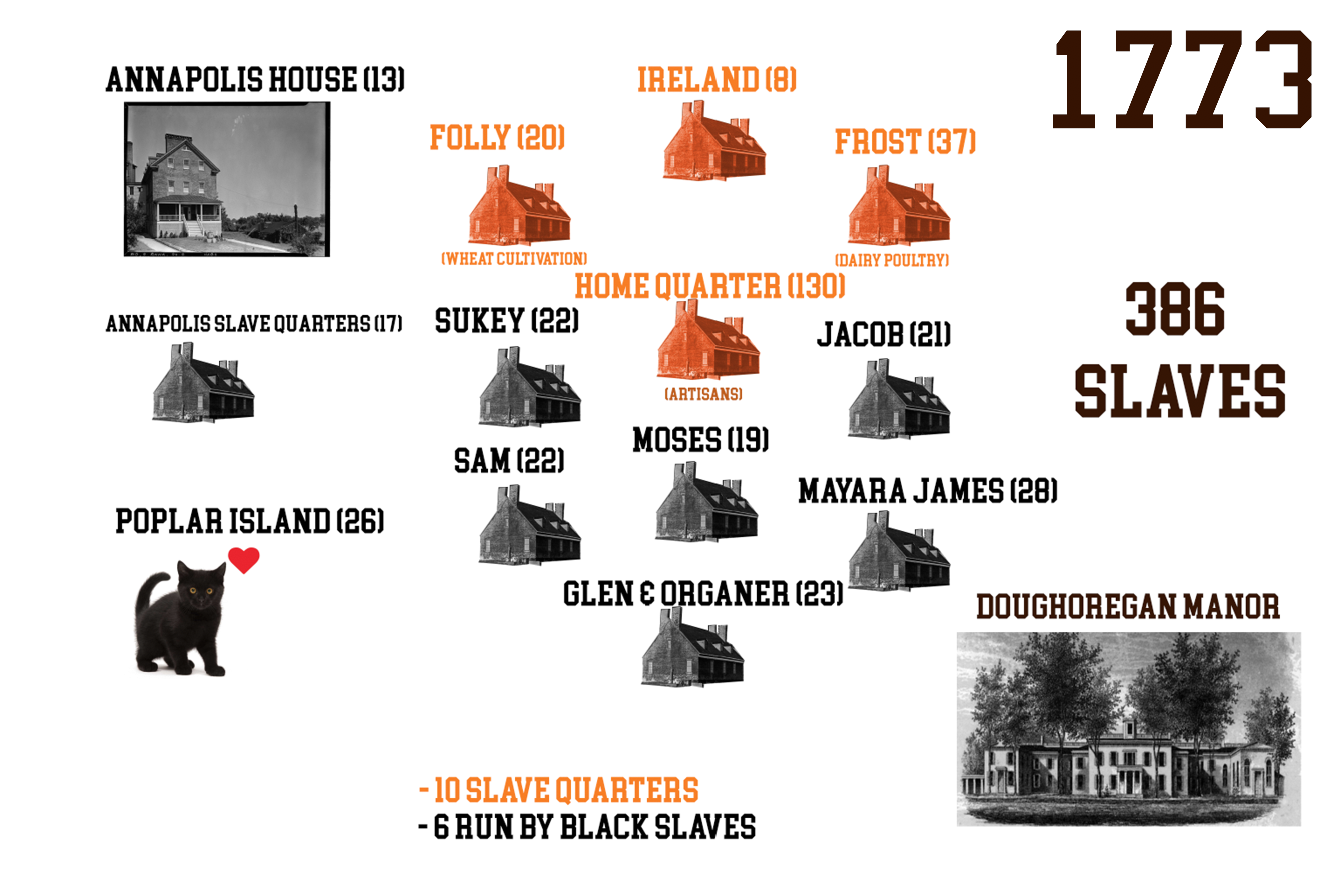
The slave quarters at Doughoregan Manor in 1773.
In 1773, the Doughoregan Manor comprised of 10 slave houses, 6 of which were overseen by black enslaved people, male and female, 4 overseen by white men. One of the black overseers was named Moses. Was this the same Moses? Little is said about these black overseers except the political mentioning of their station to imply that black people could be enforcers of racial hierarchy, as well. But these types of responsibilities were given to black people less and less as the Civil War approached, and were always used in a divisive manner. Possibly with knowledge of the Carroll enslaved overseer named Moses, John’s Hopkins professor Morgan Phillips uses an unrelated South Carolina enslaved man named Moses to show how the name might be used to counter-revolutionary ends, as well. In Phillips citation, a Lowcountry planter entrusts an enslaved black overseer named Moses, whom he has recently purchased, to assign the best work for each purchased slave. (“Moses informed his new owner, among things, that ‘Joe the son of Sancho, was apt to fly the course when pressed to work.”) What does it mean for a Christian man to own a slave named Moses?
There seems to be a flippant self-awareness on behalf of both Carrolls about the irony of owning a man named Moses.
At the beginning of the 18th century to own an enslaved man named Moses was a status symbol implying that the owner was more powerful than the pharaohs in Egypt, because this Moses had yet to escape.
But over the course of the century, especially after the Revolution, it would turn into a liability. Over the course of the century enslaved people were allowed more agency in naming, but in black culture your governernment and street name could be completely different. In other words, what the slavers wrote on the slave lists to represent their assets might have very little to do with what enslaved people called each other. Naming was important to pre-colonial West Africans, and a point of unity in the diaspora on American shores. The language of the revolution gave enslaved people the perfect material to manifest the day of their reckoning. Contrary to the beliefs of many white colonists, Moses and his God would not approve of the enslavement of their black brothers and sisters. Jefferson and Franklin might have envisioned a victorious Moses and a drowning pharaoh as the seal of the world’s first modern democracy, but in the middle of the 18th century and after the Revolution the pharaohs remained victorious .
Moses the Liberator
We discussed briefly the ways that naming has been significant for the white Carrolls, but historians have been equally fascinated by the naming patterns of the black people enslaved by them. At the beginning of the 18th century, while Dona Beatriz Kimpa Vita and her “Little Anthonys” risked their lives to reanimate Christianity’s anti-colonial message, CCS would benefit greatly by being named Charles instead of Anthony. A constant theme throughout this thesis is that names are important, but especially important for black enslaved people and their descendents.
There is no question that the naming practices of the Carroll enslaved were important and intentional, Morgan however noticed that Hoffman’s analysis was wrong on one point.
“On the Carroll plantations of Anne Arundel County, Maryland, sixty-one slavers were named for blood relative: nineteen bore the names of grandparents, sixteen of uncles and aunts, nine of great-grandparents and grand uncles or aunts, as opposed to only seventeen for parents, usually the father. … By naming their children predominantly for more distant kinfolk, Chesapeake slave parents linked new to past generations. As Gutman has observed ‘Slavery had not obliterated familial and social memory”
Again, the focus of these findings in both cases are so focused on undoing the oft-stated assertion that slavery dismantled African American families, that they miss the more likely and more nuanced reasons for these naming practices– on the Carroll side, it allowed for easy sorting and plantation infrastructure, and on the enslaved persons side, it was an intentional rituals of conjure connecting them to homeland, protection and ancestral magic. More contemporary scholars have connected these practices to African religious practice. By not naming after parents and instead naming their children after older more distant relatives, the naming tradition is in line with traditional West African cultures veneration of ancestors; older ancestors were seen as more important than recent ancestors.
In the case of the Queens, who we will cover in two chapters, the naming patterns employed by the descendants was essential in the context of the lawsuit in protecting the narrative that was being carefully destroyed by the Jesuits to deny the family’s freedom.
Naming was a way that enslaved people could achieve some agency.
Perhaps the most well known study on the naming practices of enslaved people is the study of the Ball plantation in South Carolina. In the study, not only was there evidence of special significance given to the name Moses, Moses in particular was used as a way to preserve an Angolan name. “Two Angolan slaves named after the biblical heroes Moses and Sampson continued to be known as Monvigo and Goma.”
In Vodou, the Caribbean version of conjure, “‘the Jew’ represents a particularly potent magic, centered on the figure of Moses. Haitians have canonized Moses as a Vodou spirit of their own and handmade ceramic figures of Sen Moyiz (Saint Moses) clutching the tablets containing the Ten Commandments sit on the occasional altar. With Moses long pictured in popular Christianity as the most famous magician of all time, who transformed serpents into staffs and parted the Red Sea, his magic intrigues Haitian mystics. His magic and the magic of ‘the Jews’ in general is an attractive source of power for disenfranchised Vodouists.``
The enslaved viewed White Christianity as hypocritical and separate from “true” Christianity and was referred to by the enslaved as “White Church.”
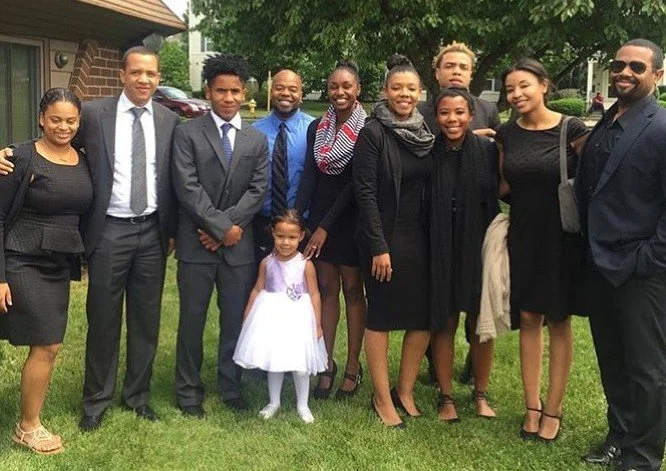
My cousins and siblings Justin, Jackson, Joel, Julissa, Jasmine, Jillian, Jessica, Me, Jennifer, Jordan at my paternal grandmother’s funeral at AME Zion Church in Rochester, NY where my father’s family went to church in Rochester and Frederick Douglass wrote the North Star in the basement.
Just verbalizing the name Moses was in itself a ritual that instantly righted the misappropriations of white ruling class. The person named Moses became the conjure object, figure or symbol.
Among the artifacts of enslaved peoples discovered on Carroll properties, Minkisi, were common.
“The West African minkisi which could describe the Carroll house materials. These minkisi are bundles or caches of crystals, pebbles, gnarled roots, pieces of iron, metal, ivory, wooden rings, and crab claws, usually wrapped up in leaves or cloth. Referred to in American narratives as “hands” “mojos” or “tobys,” these caches were made in Africa and America and used by specialists to direct spirits, protect, diagnose and foretell. They could also contain items such as foot tracks or human hair, that linked a particular person to the desired actions.”
Minkisi, in a traditional sense, were present on Carroll plantations in the form of caches of coins, buttons, glass, crystals and cowrie shells. But historians seem to overlook the possibility that human hair was a less ideal version, that perhaps conjurers preferred an entire willing being to be the minkisi. Thus the full embodiment in Moses.
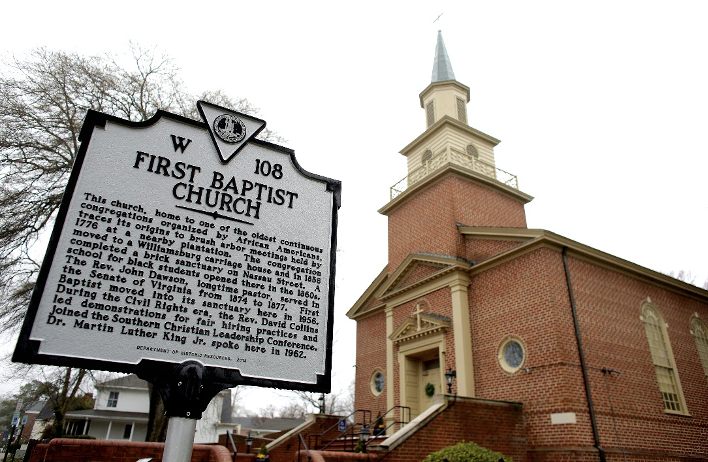
African Baptist Church of Williamsburg, VA
In describing evidence of the earliest black churches, Albert Raboteau uses the example of the African Baptist Church of Williamsburg, VA. The Church is special to Raboteau in that it was founded independently, unlike the other early black churches formed out of a segregated branch from a larger white church. The church was composed entirely of people of color, but frequented by white onlookers stunned by the magnificent event. “Moses, [founder of the Church] was a black man, first preached among them and was often taken up and whipped, for holding meetings.” Founded in the 1780s, and one of the largest churches of any racial makeup in the area, the church was closed and disbanded in 1831 in the wake of Nat Turner.
The first three generations of Carrolls denied trying to indoctrinate their enslaved people but this was probably due to a fact that Albert Raboteau long ago recognized, that despite the best efforts of eighteenth‐century evangelicals, “the majority of slaves … remained only minimally touched by Christianity by the second decade of the nineteenth century.” Indeed, many slaveholders expressed deep apathy, if not outright hostility, to the prospect of extending religious instruction to slaves on grounds that conversion would encourage slaves to rebel. As a result of this concern, white religious authorities eventually devised a theology that emphasized submission before authority and forbearance in face of oppression, centered primarily on Paul and Duetoronomy. Not close readings, mind you. The enslaved people’s own practice reversed this agenda by emphasizing Exodus and Moses, instead.
“The strongest alternative to Protestantism among the slaves was the tradition of conjure. A combination of religion, medicine, magic and folklore, conjure flourished in the slave quarters. The appeal of conjure depended upon its effectiveness in explaining illness and misfortune and its prescriptions of curing them. Slaves and surprising numbers of white people believed that conjure had the power to cure but also to harm.” Despite the mission of CCA’s nephew, Archbishop John Carroll, conjure, not Catholicism, was the strongest alternative to mainstream American Protestantism that dominated most plantations. In fact, scholars like Theophus Smith, Albert Raboteau and Jason Young argue that Catholicism, with its highly ritualized services, altars, holy objects and saints, made a more fertile ground for conjure than mainstream American Protestantism. And even within the white Church; its many versions and branches of Protestantism in the colony (Evangelism and its suspiciously African influences was beginning to dominate Christian practice in the colony, and make the denial of African spiritual influences in the United States even more difficult.)
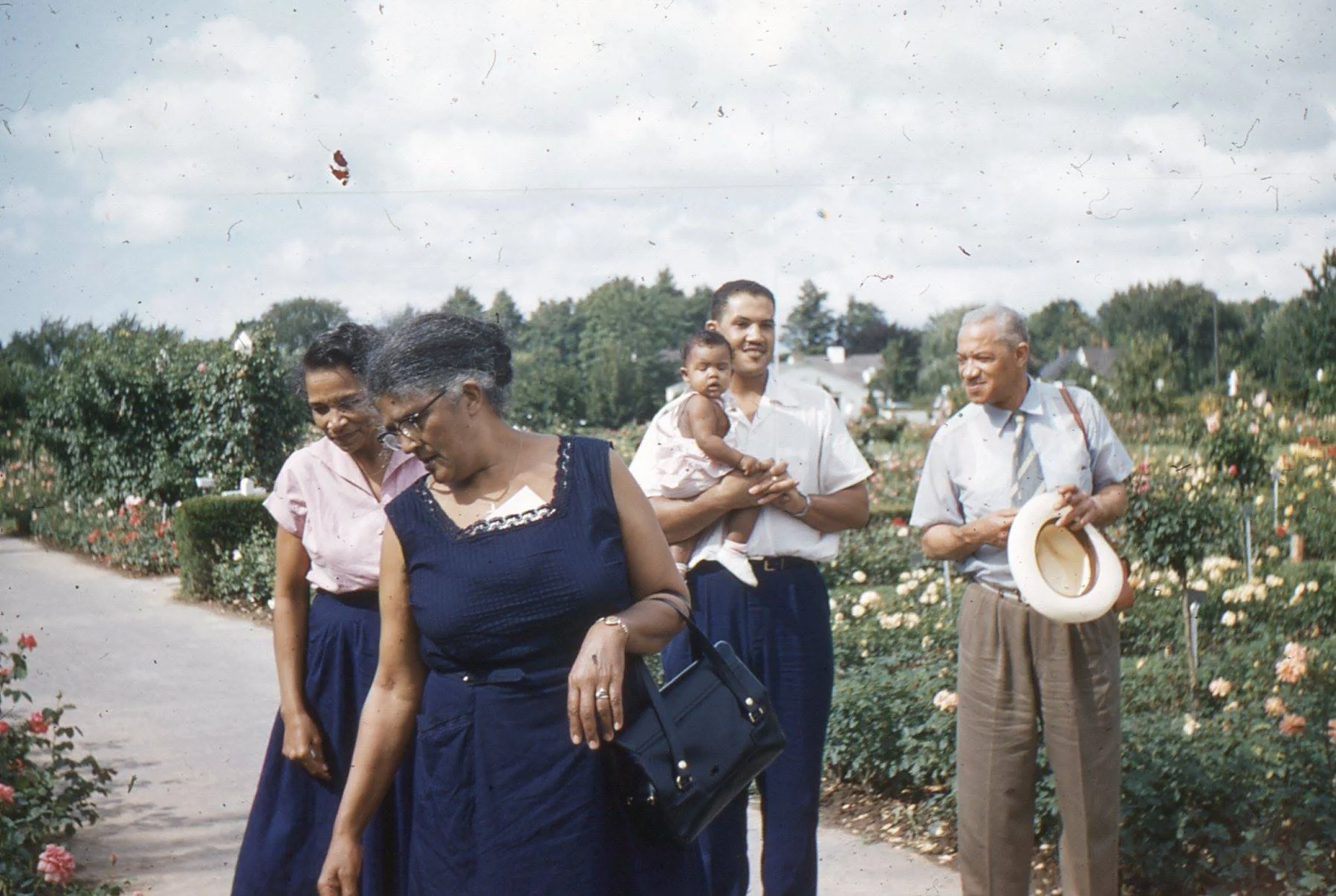
My great-grandmother Nana, her mother-in-law Fannie Page, My grandfather Julian Orlando Carroll II holding my father, and Julian Orlando I far right.
“After seeing an article in the New York Times about deposits of “Quartz crystals, pierced discs, pierced coins, beads, pins, a rounded black pebble and a white potshard with a blue asterisk painted in the interior bottom… Dr Frederick Lamp, curartor of African art at the Baltimore Museum of Art [identified] the materials would have had to be used only by African slaves or enslaved African Americans living in the Charles Carroll big house.” The items, explained Lamp, “were used to control spirits who left the body at death and who wandered via water back to the sea, their ending point as well as their source. Spirits conceptualized in the West African way, could be directed to perform for humans by using material items that looked like water, death or flashes of light. The spirits so directed or controlled, could protect, cure, or shape the future.”
The WPA narrative, collected during the 1930s and other orally collected sources comment on Africa, healing, curing of hexing, protection from conjurers, foretelling, root doctors, clothing, hair, roots, bones and the whole divine pharmacopeia of items used to get spirits to handle ailments and life crises.”
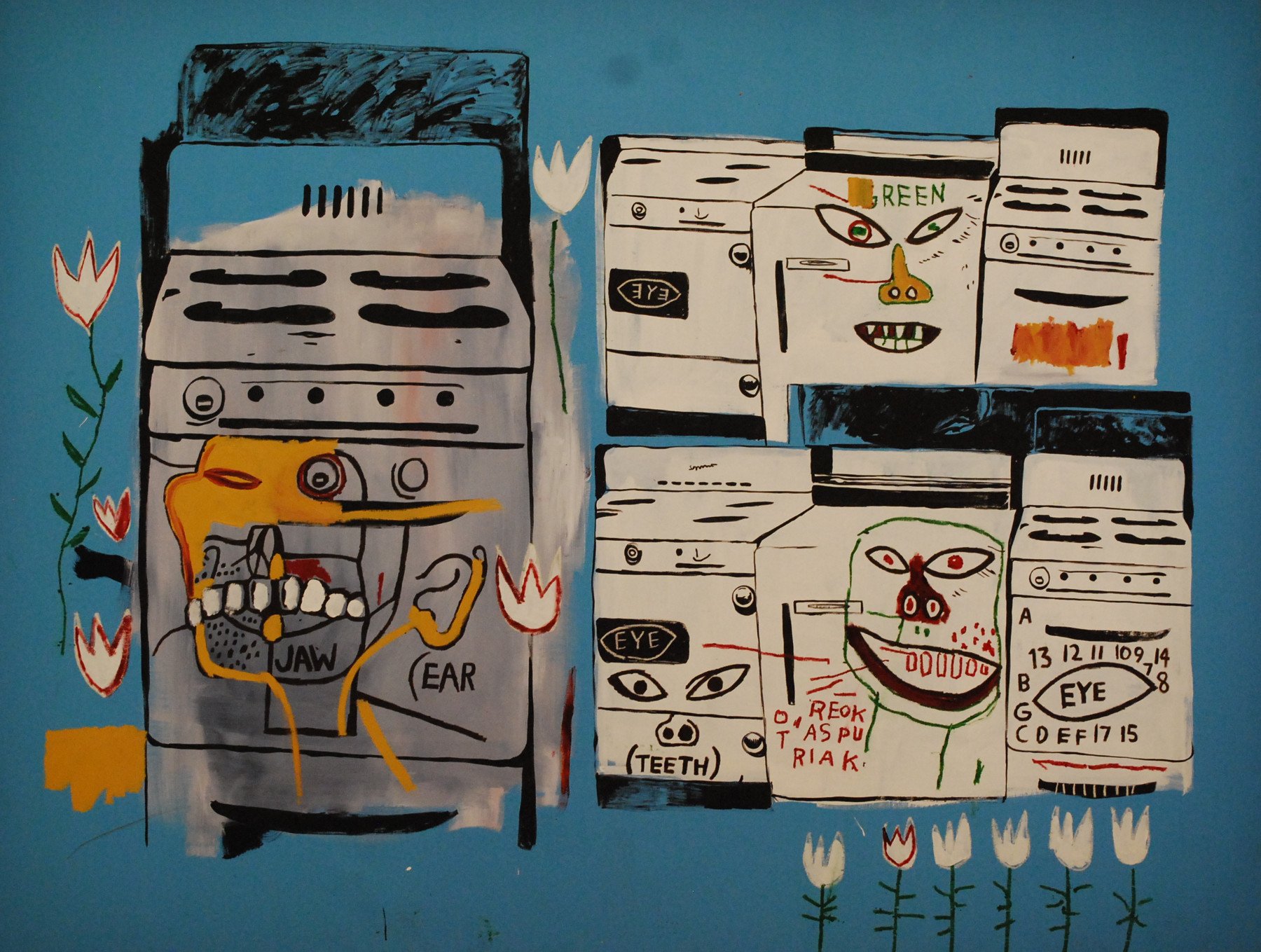
Jean Michel Basquiat Andy Warhol collaboration “Graffiti Abstraction Painting Stoves, 985”
“All the environments where caches were found in Annapolis have been work spaces in the large houses, either in kitchen or laundry rooms where African Americans, slave or free, and probably women, prepared the meals for master and guests. These large houses, dating to the 18th century and in use through today, have materials forming caches in their kitchens, laundries and pantries. Within these rooms, sacred spaces for the placement of conjuring artifacts were northeast corners, hearths and door sills.
This reference to the importance of the northeast corner invokes a connection to escape the runaway. From the Baltimore area, Philadelphia, a common destination for runaways, is in the northeast. The shore is northeast. For these enslaved people, ritualizing the Northeast was imperative, similar, perhaps, to how Muslim people face qibla, or Mecca to pray. West African religious leaders from various countries, had many experiences countering imperialism, slave trading and greed came together in America and created a unique religious practice.
Conjure appears in primarily three forms, according to archeologists, but these formal identifications may miss more straightforward explanations.
We have seen that the narratives are the text for a coherent belief in spirits that exist everywhere, are powerful, were once in human form, and can act on human issues. Conjuring hands can cure diseases, for example. They can be used to help guarantee success or some happy outcome. Thus, they manage to foretell an event. We also see that hoodoo or conjuration is a set of practices that does not depend on words.
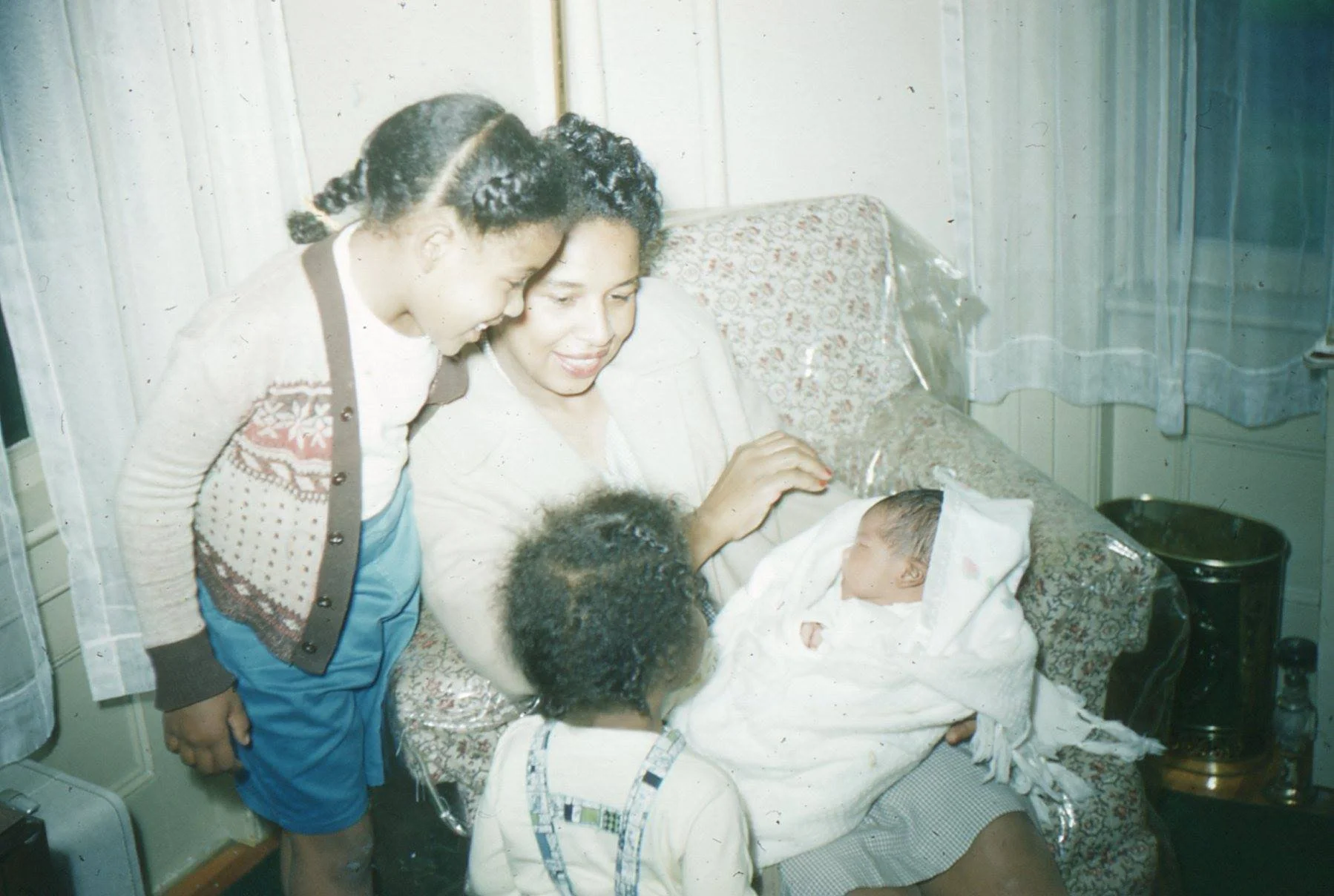
My grandmother and my father, jpc1. Surrounded by sisters Juanita Elizabeth and Jacquelyn.
“There was a hidden set of everyday cultural practices going on in and beneath the master’s house in parties that can be termed sacred spaces, practices with their origins very clearly in Africa. And they left an enduring presence that now allows us to see these buildings not only as the lovely results of the influence of Robert Adams and Virtruvius but also as compelling reminders of hundreds of years of African and African American resistance to the slavery and racism that the houses were built to institutionalize.
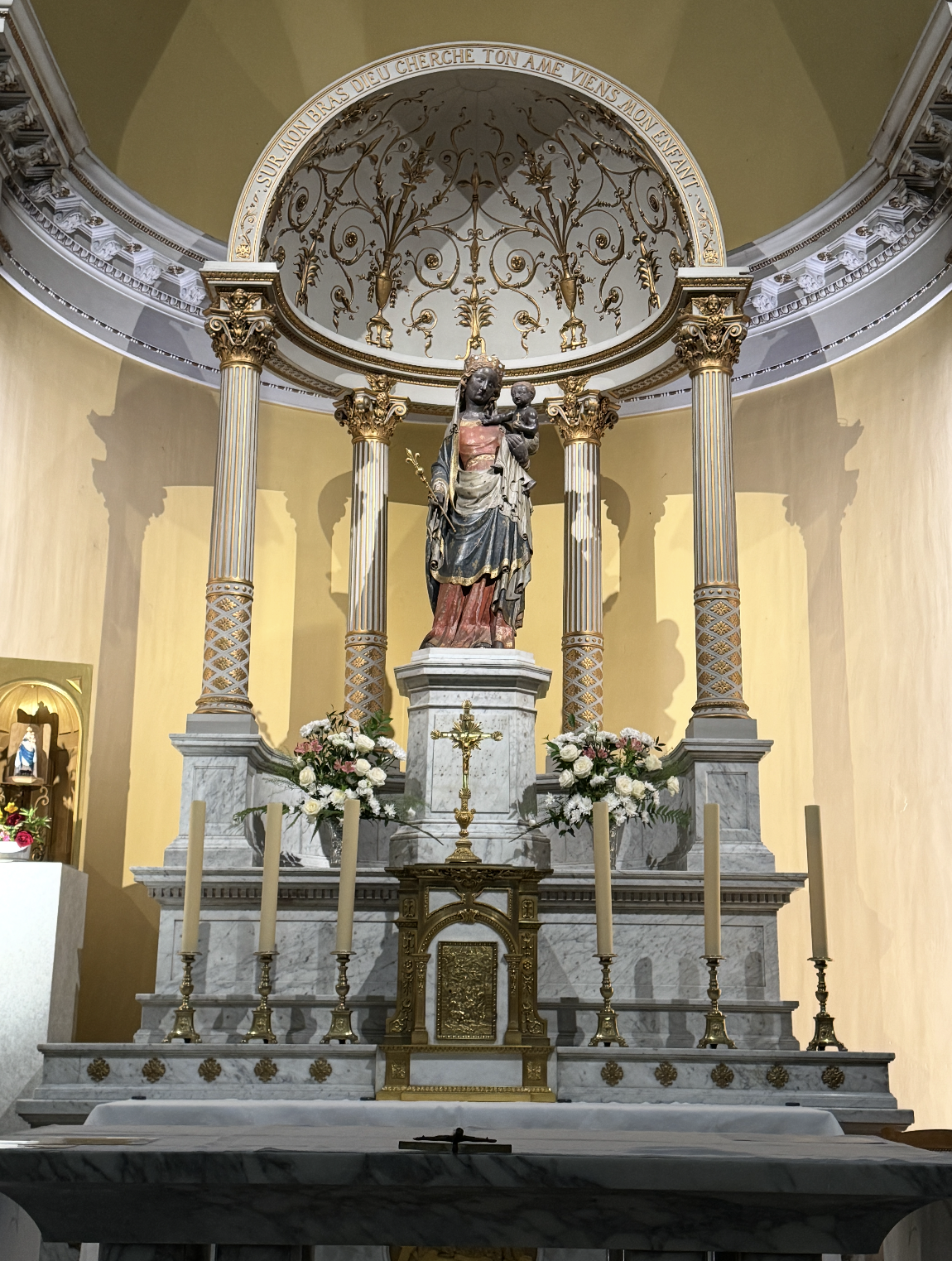
The Black Madonna of Deliverance or Notre-Dame de Bonne-Délivrance is a revered 14th-century statue of the Virgin Mary, located in Neuilly-sur-Seine near Paris. She is historically renowned among pilgrims for divine intercession in trials, calamities, and "underworld" journeys of spiritual or physical distress
Naming allowed enslaved people to actively call on their ancestors and important figures from history to help liberate them and future generations. The linguistic practices of enslaved people were violently policed: enslaved people could not talk back to any white person, had to speak in a submissive tone; and were not allowed to speak for themselves in court.
Naming could defy these restrictions and allow the enslaved to create call and response rituals with those they loved.
Post Civil War, there was an “ongoing presence of an active belief system derived from African practices and centered on sacred spaces and protective magic.”
Naming is also a form of conjure, and like with doorways and fireplace chimneys, spirits slip into persons through names.
William Roberts, aka Rick Ross
African American slaves of the Carrolls had naming practices that echoed their conjure practice. The naming brought back certain ancestors on whom they relied for help.
Cheryl Ann Cody’s statement that, “Hagar, the servant who bore biblical son Ishmael, would be an unlikely choice of name for a white woman,” is full of racist assumptions, but it does illustrate the significance and political weight of names in life on the plantation. Hagar was Abraham’s side chick, whom he had a child named Ishmael with. Ishmael is said to be the progenitor of the Arabs. When Cody says a white woman would be unlikely to be named Hagar, she is speaking to both the unlikelihood of a white woman identifying with Arabs and the unsuitability of her status as a woman who was not the main wife. Cody takes for granted the fact that there are no white women in the Bible at all.
In light of this, Moses could be both empowering and especially problematic for an enslaved person, as in the case of the founder of the African Baptist Church. The name Moses, especially as the undertaker of some revolutionary act, implied a certain type of religiosity, which I argue is the central function of its power. A Christian slaver or overseer could not yell, whisper, or even write the name without at least a twinge of irony or sting of hypocrisy.
Though the entire text of Slave Counterpoints is intentionally patronizing (Morgan refers to slave masters throughout as patriarchs and you should imagine the professors aristocratic English accent for the full weight of this tone). Philip Morgan used Moses as an example of the enslaved people who advocated for themselves in court. According to Morgan, “slaves could, on occasion, defend themselves. Moses was ``heard in his own defense” and acquitted in an Essex County court. In this example, the name Moses could make a sympathetic, or Biblically literate judge, sympathetic to the enslaved person’s plight.
This chapter is only begins to scratch the surface of why the black mothers of the Carroll plantations matter so much. Not as supporting characters in the story of white wealth, but as the hidden architecture beneath it. Old Grace, Old Fanny, Rachel, Goslin Kate, Battle Creek Nanny, Banks Nanny, Old Moll, Suckey, Nan Cook, Old Peg, Old Nell, and Sam’s Sue were not incidental to the plantation. They were the plantation. Their bodies produced the labor force, the inheritance structure, the liquidity, and the permanence of Carroll power in Maryland. The archive records them as inventory while simultaneously depending upon them as mothers. That contradiction sits at the center of American slavery itself. Naming their children may seem like an insignificant part of slave life in contrast to the brutality of their station and the essential nature of their work. But to those seeking to remember them, and preserve their humanity in the archives names mean a lot. Evidence shows enslaved people felt similarly.
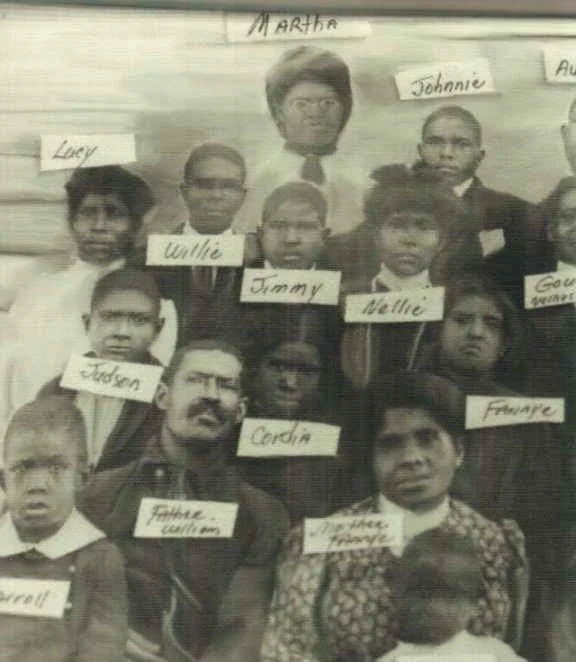
Photo of Fannie’s family, the Pages from Virginia.
And among them, Rachel feels a particularly significant name. Rachel was to the enslaved women, who hat Moses was to the enslaved men. Her presence lingers differently. Not simply because she gave birth, but because she appears connected to the emotional and symbolic center of CCC’s world in a way the archive reveals to those who look for it. There is a gravity around her name, created by Biblical symbolism but expounded upon by enslaved people desperate for self-expression and connection to their distant homeland. There is also suggestion of attachment by the enslaver, who sought to have black concubines named Rachel and reclaim runaways named Moses. A dependence we will discuss in two chapters, that the names highlights. Slavery allowed black people to live authentically in these characters, in a way that the enslaver could not. In a slave society obsessed with bloodlines, inheritance, and legitimacy, Rachel represents the uncomfortable proximity between the enslaved mother and the enslaving household itself. Yes, their is a racial hierarchy, but who is really in control: the enslaved woman was made legally alien while simultaneously functioning as the reproductive center of the entire system.
The tragedy is that motherhood under slavery became both sacred and weaponized. A Black mother’s A Black mother could create lineage lineage while being denied the wealth her family produced. She could birth generations while remaining property herself. Her children could expand dynasties that would never be recognized as her creation.
Yet through naming, ritual, religion, memory, and survival, these women preserved fragments of personhood that the plantation could not fully consume.
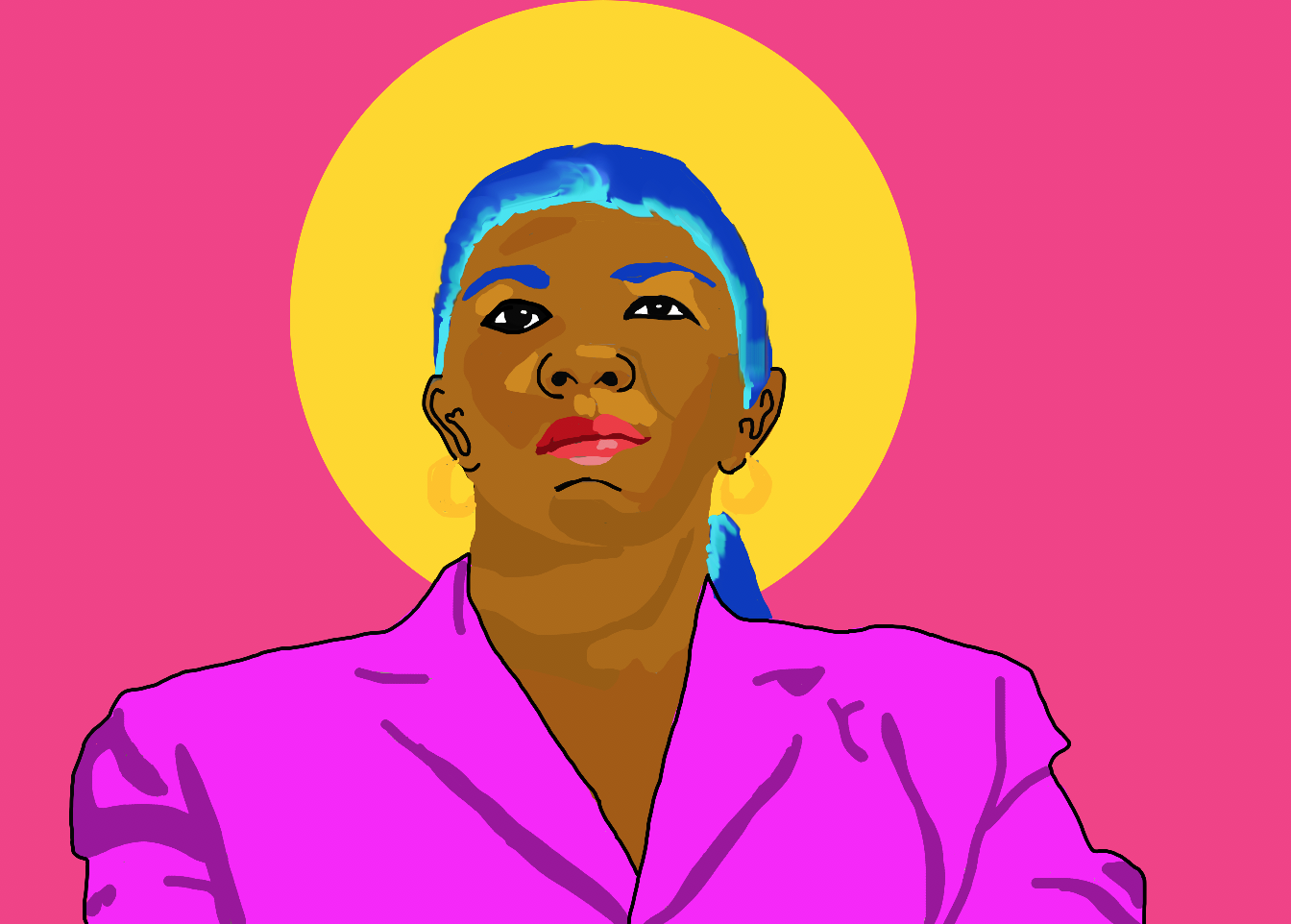
My aunt Chelley, born Jacqueline Carroll
This is where the Black Madonna re-emerges, not as metaphor alone, but as historical reality. The enslaved mothers of Maryland carried the burden of sustaining life inside a structure organized around social death. They absorbed violence while continuing to create community, kinship, spirituality, humor, language, and memory. Their motherhood became a form of resistance against annihilation itself.
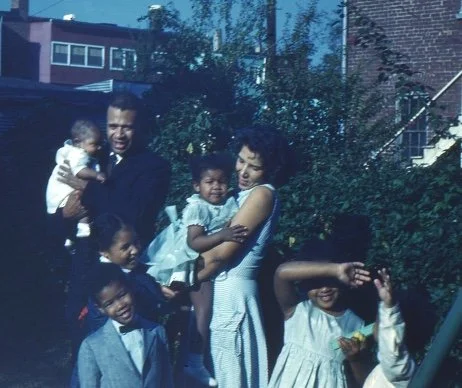
My great aunt, Rachel Carroll, center, surrounded by my uncles and aunts.
The Black Madonna survives inside that contradiction. She survives because Black mothers preserved life in a system organized around fragmentation. They carried memory where the archive erased it. They carried kinship where the law denied it. They carried children who would inherit not land or titles, but survival itself. And in doing so, they became the buried foundation beneath the American story the Carrolls helped build.