PREFACE: U CAN’T C ME
"The blank stares of a million pairs of eyes looking hard but won't realize that they will never see the P" — George Clinton
I. The Letter(s)
In September 1995, Tupac Shakur, the famous now deceased rapper/actor, wrote a letter to Chuck D, his hero and a half of the conscious 90s rap group Public Enemy, from a New York prison cell. Chuck D shared it on Twitter in June 2014. Rolling Stone picked it up the same day and published a brief article by staff writer Kory Grow.1 Grow's article is four paragraphs. Its entire analytical contribution is this: Tupac respected Chuck D. He learned from touring with Public Enemy. He wanted Chuck to appear on a track called "Da Struggle Continuez" for his next album, which he was calling Euthanasia at the time. He offered Chuck a role in a movie. He mentioned making bail pending appeal. He said he had just signed to Death Row and hoped to be free by the time Chuck was reading the letter. He closed by saying he believed they could make a difference.
That is everything Kory Grow found worth saying about a letter written by one of the most intellectually deliberate artists of the 20th century, from a maximum security prison, eleven months before his murder.
The article does not mention the name of the prison. It does not mention the name of the president who signed the bill that filled it. It does not mention the song featuring Chuck D’s partner Flavor Flav released five months after writing the letter. It does not mention the word conjure, the word ritual, or the name Clinton once. It does not ask why a man who had just survived being shot five times in a recording studio lobby, who was appealing a sexual abuse conviction on documented grounds of prosecutorial misconduct, who was about to sign a deal that may have cost him his life, was writing to Chuck D about the struggle continuing. Rolling Stone read Tupac's letter and reported what it said.
This book reads what it meant.
II. Public Enemy
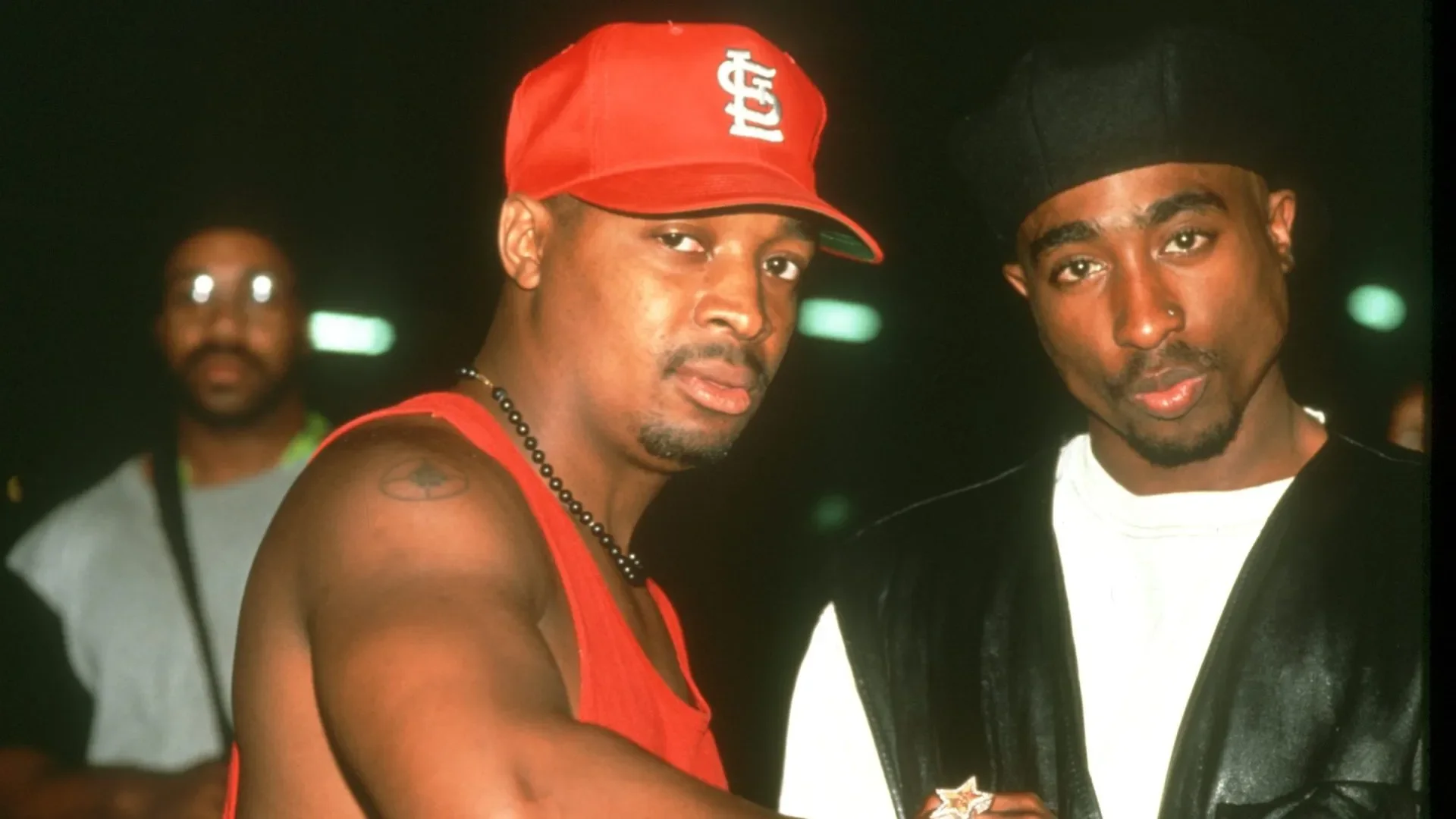
Chuck D and Tupac Amaru Shakur
To understand what Tupac was writing and why, you have to understand where he was writing from and what had been done to him to get him there. And Tupac sat in Clinton Correctional Facility in Dannemora, New York, writing letters.4 The letter to Chuck D was written in September 1995. In it, Tupac says, and this is the line that Kory Grow quotes and moves past without pausing,
"It may be hard 2 C but u have alwayz played a major role in what it is I do 2day."
U Can't C. The letter contains the song's title as its emotional thesis. Tupac is telling Chuck D that you probably cannot see how much you have influenced me because you are caught up in the same surface-level reading everyone else is. You see Thug Life. You cannot see the method. You cannot see the ritual. U Can't C Me. But there is something else in that letter worth sitting with. The track Tupac was proposing, "Da Struggle Continuez," is itself a statement that needs to be interrogated.
Tupac's generation had grown up watching the struggle continue.
They had watched their mothers continue struggling. They had watched the crack epidemic continue the struggle in their neighborhoods while the people who caused it continued not struggling toward more money and more power.
Chuck D's generation named their movement after the struggle. By the time Tupac was released from prison he was done with the struggle. All Eyez on Me is not a retreat from revolution. It is a 23-year-old Black man from Baltimore deciding that his people had been struggling long enough and it was time to take something.
The drugs, the sex, the money are not the point. They are the lure.
Five months after writing that letter, Tupac was released on bail posted by Death Row CEO Suge Knight. The price was three albums. Suge Knight purchased Tupac's legal desperation and turned it into a recording contract. Tupac went to Los Angeles and made All Eyez on Me, not the Public Enemy collaboration he had proposed to Chuck D, not the revolutionary record he was reaching for in his letter, but the gangster rap double album the market and his contractual obligations demanded.4 Suge Knight paid Tupac’s bail, not Chuck D. Tupac was shot on September 7, 1996 and died on September 13, 1996.
III. Chuck Conjure

Flavor Flav of Public Enemy
“Can’t C Me” doesn’t just feature Chuck D’s partner, it also features funk founding father George Clinton. Clinton Correctional Facility, where Tupac was jailed, is named after George Clinton, not the musician, but the Founding Father, the first Governor of New York, a man who held enslaved people and helped build the legal architecture of the American republic. George Clinton the musician, Parliament-Funkadelic, the architect of Afrofuturist funk mythology, a man whose entire artistic project was built on the premise that Black people are the original cosmic beings stolen from their home planet and enslaved on Earth, is the artist Tupac put on "U Can't C Me" five months after writing from a prison that bore the Founder's name.
Bill Clinton was President of the United States while Tupac was incarcerated. On September 13, 1994, Bill Clinton signed the Violent Crime Control and Law Enforcement Act, the largest crime bill in American history. 356 pages. $30 billion. 100,000 new police officers. $9.7 billion for prison construction. Truth-in-sentencing provisions that required violent offenders to serve 85 percent of their sentences. Title IV of that bill was the Violence Against Women Act, which created specialized prosecution units, mandatory restitution, and federal funding specifically for the investigation and prosecution of exactly the kind of case Tupac was appealing. The prosecutorial apparatus used against him was being federally fortified in real time while he sat in Clinton Correctional waiting for his appeal to be heard.5
Conjure was not merely “folk magic” but a vernacular technology of spiritual power through which enslaved Africans interpreted, resisted, and reshaped the conditions of Atlantic slavery. Academia often depicts conjure as an obsolete religious practice having ended with slavery, but this book argues otherwise.
Tupac's last words were "Fuck You."
He said them to the Las Vegas police officer who held him as he died. That officer's name was Chris Carroll. In that moment Da (multi-generational) struggle did continue, Conjurers v Carrolls, Moses’ v Pharaoh. Moses’ victory temporary.
IV. Pharoah, Clinton Conjure
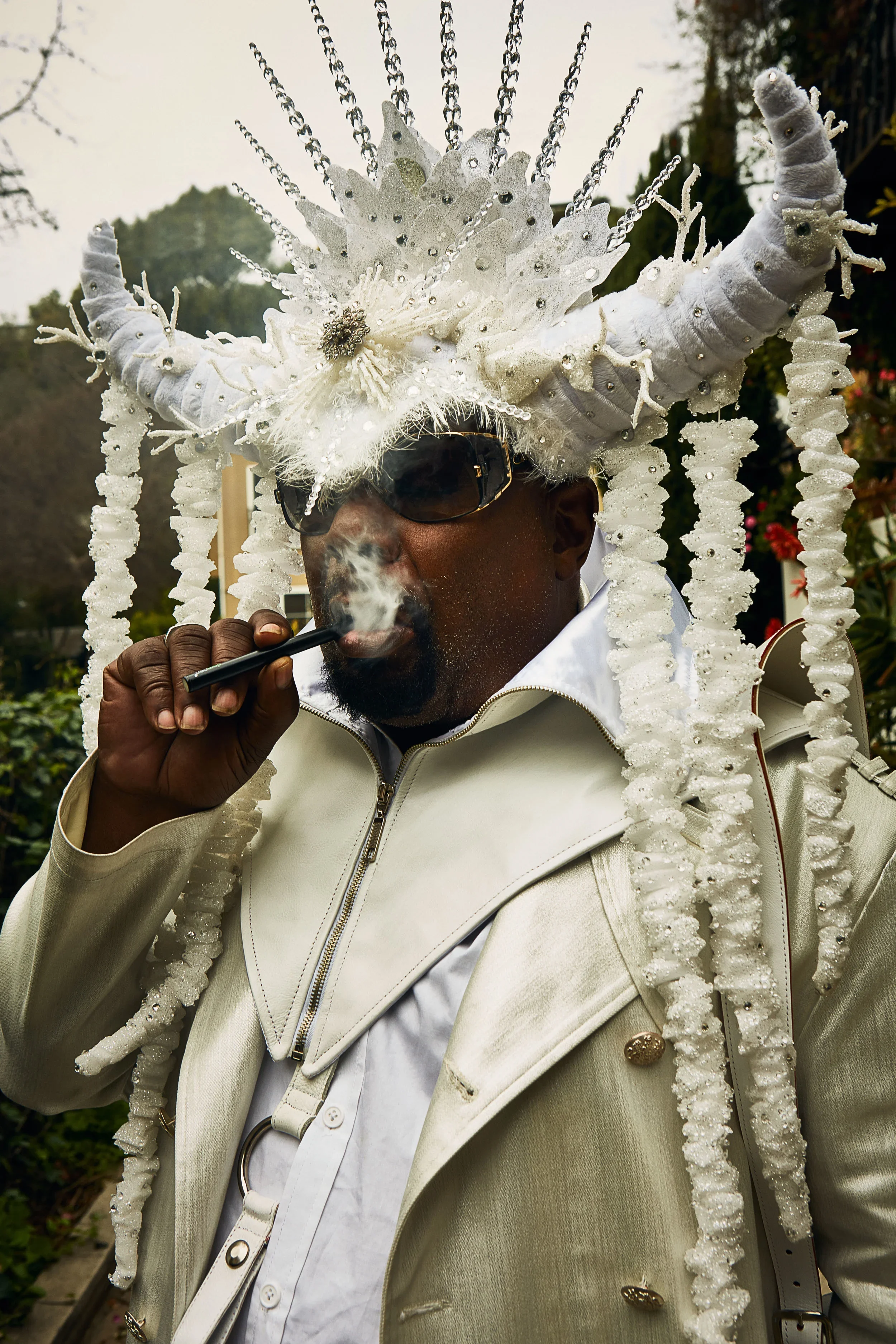
George Clinton aka Dr. Funkenstein
Flavor Flav is Chuck D's other half, the counterweight, the id, the living embodiment of Public Enemy's dual consciousness. We see their dynamic later embodied by Moses and Joseph Shipley in Chapter 9: The 3 Moses Weave. You cannot have Flavor Flav without Chuck D. By putting Flavor Flav on "U Can't C Me," Tupac conjured Chuck D onto the record without naming him. Chuck D is present in his absence, summoned through his closest collaborator the same way a conjurer summons an ancestor through an object that belonged to them. George Clinton the musician built a cosmology devoted to freeing the Black body. Clinton Correctional held Tupac's body.
Tupac put George Clinton the musician on the record that answered the prison. The name Clinton, Founding Father, prison, President, musician, is the conjure object.
But this was likely one of things that came together magically, as George Clinton was always an inspiration to Tupac, evidenced by the fact that Tupac’s first song on his first album includes a George Clinton sample. Clinton’s live feature on “U Can’t C Me” was likley a dream come true for Tupac on many layers.
The same way five generations of men named Charles Carroll used their shared name to consolidate inherited power, Tupac turned the name Clinton inside out and made it a weapon pointed back at the institution.
This is not a metaphor. This is a ritual. Tupac knew exactly what he was doing. The record is hiding in plain sight.
"U Can't C Me" is the challenge to the premise of his proposal to Chuck D. The collaboration track was Tupac's attempt to be explicitly revolutionary. But Chuck D did not bail him out, Suge Knight did. So All Eyez on Me is a gangster rap classic instead of a Public Enemy album. But the ritual was completed anyway, Flavor Flav, George Clinton, the prison's own name turned against it, the letter that said U Can't C how you have influenced me. The method was always there. You just had to be willing to look. Kory Grow was not willing to look.
V. Conjure, Crystals, and the Carroll House
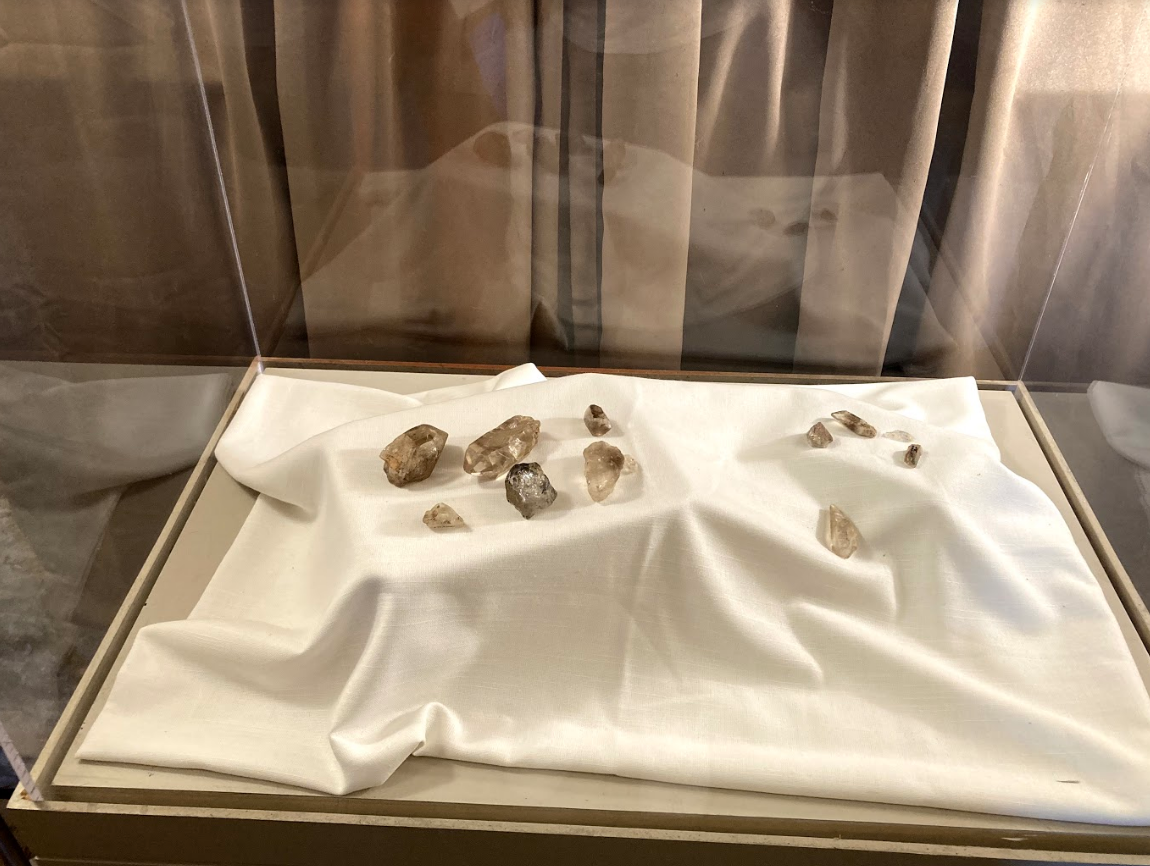
Quartz crystals found in archealogical dig at Carroll House in Annapolis, MD.
The mistake that Kory Grow makes is exactly the mistake Lynn Jones makes in her 2000 archaeological report, "Crystals and Conjuring at the Charles Carroll House, Annapolis, Maryland," which documents the discovery of quartz crystals, ivory rings, smooth black stones, and a bowl painted with what scholars identified as a Bakongo cosmogram beneath the floors of the Carroll mansion in Annapolis. Jones and the scholars she cites, Dr. Frederick Lamp, Dr. Robert Farris Thompson, Dr. Peter Mark, correctly identify the objects as evidence of African conjure practice. But they frame the finding as a survival story: African religious practices persisted despite the Middle Passage and enslavement.
The article's framework treats the crystals as evidence that something primitive survived the sophisticated Catholic-American environment of the Carroll plantations. Jones is telling a story where the Carroll house is civilization, and the crystals are the footnote. The enslaved people are the primitive contrast to the sophisticated Catholic world around them. This book reverses that entirely. What the article does not say, is that those practices arrived in Maryland already at least three hundred years sophisticated. The Kongo people had been practicing Catholicism since 1491, when King Nzinga Nkuwu was baptized and his son Alfonso I consolidated it as the state religion. They had spent three centuries in direct theological negotiation with Portuguese colonialism.
Alfonso I declared the Kongo a Catholic nation in 1509, the same year Henry VIII became King of England. These two men made equally profound breaks with Rome on the same timeline. One is treated as a pivotal moment in Western civilization. The other is treated as a footnote to the Atlantic slave trade.8
To give perspective on how pervasive Catholicism was and is in Congo both Patrice Lumumba and Mobutu, Congolese rulers considered on opposite side of the political spectrum, were both raised Catholic. What Jones and her collaborators also cannot say is why crystals specifically. The Congo holds the largest concentration of critical minerals on earth, with UNEP estimating $24 trillion in untapped mineral wealth, including approximately 70 percent of the world's cobalt reserves, vast deposits of coltan, copper, gold, and diamonds.9
Crystals and stones and metals were not arbitrary objects of mystery in Central African religious practice. They were materials whose power was understood through generations of intimate relationship with the Earth that produced them.
The people, the Portuguese and then the British kidnapped and shipped to Maryland, were not reaching for random shiny objects to make charms with. They were working with materials they had known for centuries, whose spiritual properties were as precisely understood as their mineral properties. When the people enslaved at the Carroll house placed quartz crystals in the northeast corner of the room, northeast toward Philadelphia, northeast toward freedom, they were conducting precision spiritual engineering with materials sourced from the most mineral-sophisticated culture on earth.
The Portuguese did not come to the Congo for Jesus, they came for the minerals.
The crystals beneath the Carroll house are a direct line back to what the Portuguese were trying to steal, transformed by the enslaved into a weapon the thieves could not see or understand. The crystals found beneath the Carroll mansion were not the remnants of a dying practice.
They were the products of one of the most intellectually and materially sophisticated religious traditions on earth, placed deliberately by people who understood exactly what they were doing and exactly who their enemy was.
The enslaved people in that house were not just survivors. They were practitioners. Now consider what it means that Jones and her collaborators, serious, credentialed scholars with access to the actual objects, the actual house, the actual documents, missed this. They had the crystals in their hands. They had Thompson and MacGaffey and Lamp reading them. They correctly named the tradition. And they still framed it as primitive rather than profound.
VI. The Blind Stares
“They say Moses split the Red Sea I split the blunt and rolled the fat one,
I'm deadly -- Babylon beware Comin from the Pharaoh's kids,
retaliation Makin legends off the shit we did, Still bullshittin
Niggaz in Jerusalem, waitin for signs God promised, she's just takin her time, haha
Living by the Nile while the water flows I'm contemplating plots
wondering which door to go Brothas getting shot, comin back resurrected”
- “Blasphemy”, Don Killuminati: 7 Day Theory, 2Pac
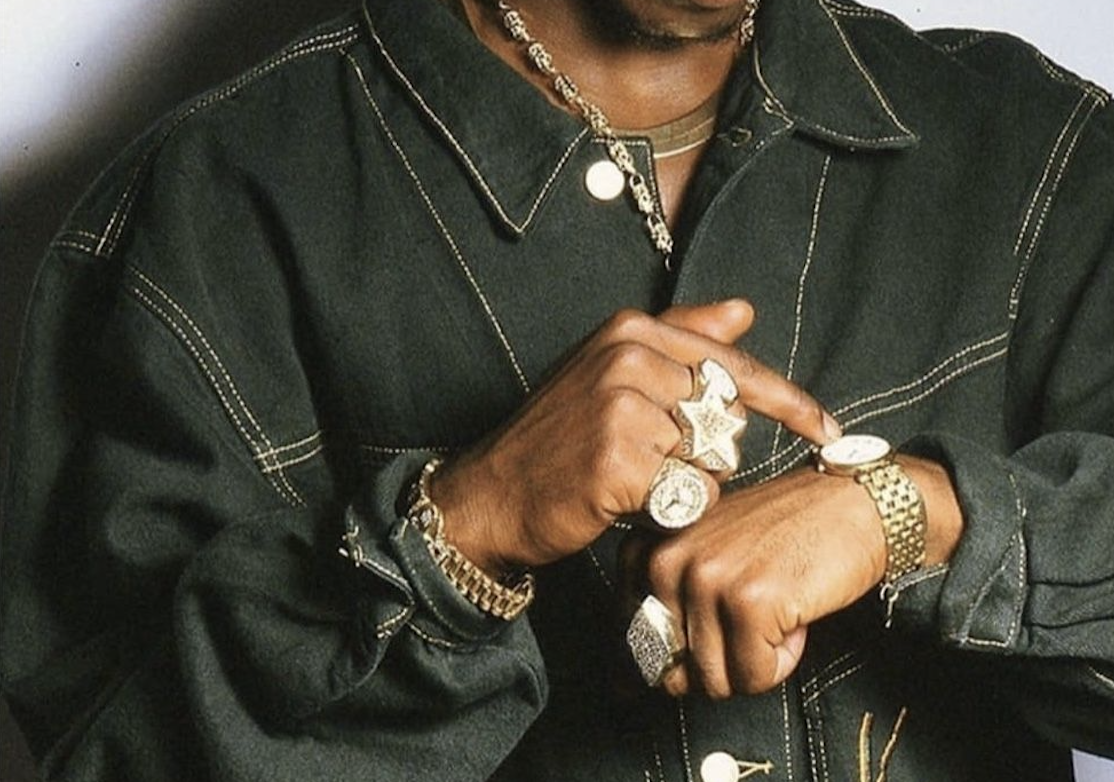
Kory Grow had Tupac's letter in front of him. He had access to every public record about Tupac's case, his prison, his president, his godfather, his music. He had the Rolling Stone archive. He had the internet. He had time. And he produced four paragraphs that missed everything, the prison's name, the three Clintons, the conjure ritual hiding in the song title. Kory Grow had the letter and could not read it. Now ask yourself: how do you think the historians are doing with the Carroll family letters? The Carroll letters have been mined for decades, primarily for any reference to Benjamin Franklin, Thomas Jefferson, John Adams, the Revolution's white male heroes.
Scholars have read Charles Carroll of Annapolis's letters to his son for evidence of the founding generation's political philosophy. They have found what they were looking for. What they have not found, because they were not looking for it, is the normalized cruelty documented in the same pages. The enslaved man named Moses was planting 10,000 tobacco plants. The stone wall that Moses was asked to survey and describe. The overseer Flattery, whose "expedition," a 19th-century euphemism for violence, is mentioned in the same breath as Moses's output. These details are present in letters that have been read by every serious Carroll scholar.
They have been noted. They have not been understood.
And that is the Carroll family letters, documents written by literate men who at least had reason to record (and intentionally not record) what was happening.
The men named Moses were not allowed to write. Everything we know about what they thought, feared, intended, and practiced comes to us filtered through the letters of the men who owned them or the partial caches they left behind. Except for those who embody what they lived to this day. Academia is reading the Carroll letters, the cultural vestiges of their enslaved, the way Kory Grow read Tupac's letter, for what they say, not for what they mean. For the surface transaction, not the ritual underneath. This book is a map key for understanding not just Carroll plantation history in the 18th and 19th centuries, but American history from the founding to the present day.
VII. Machiavelli Conjure
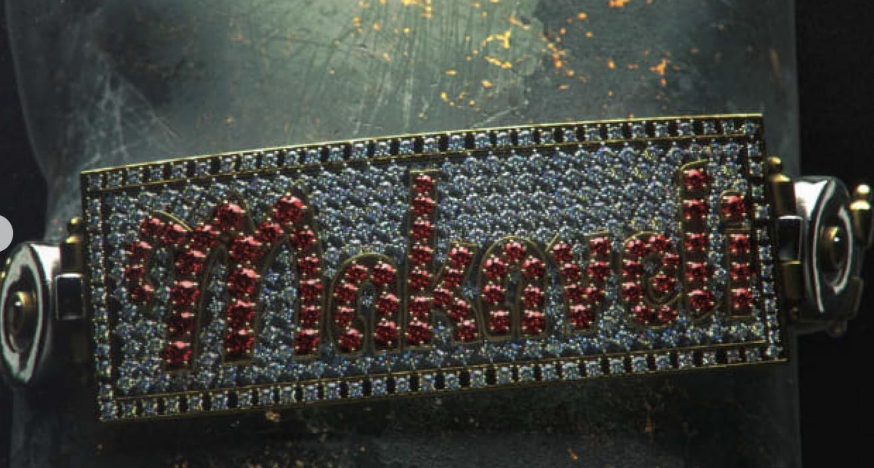
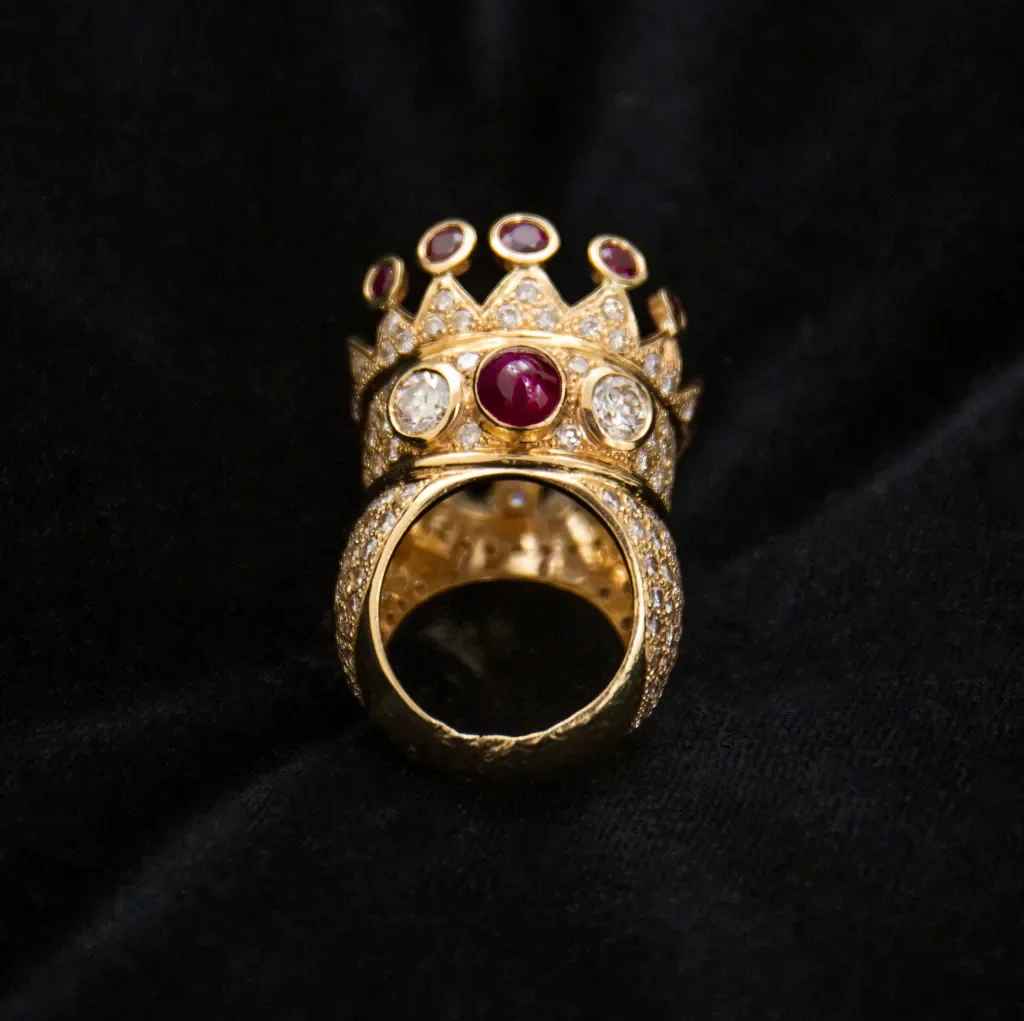
Tupac diamond encrusted “Makaveli” bracelet.
Tupac named his last album Makaveli: The Don Killuminati: The 7 Day Theory after Niccolò Machiavelli, the 15th-century Florentine diplomat and political philosopher whose ultimate treatise on power is titled, The Prince.1 The Prince is a guide to acquiring and holding power, addressed to a ruler inheriting a kingdom. But its revolutionary significance is not the argument; it is the language.
Machiavelli wrote The Prince in vernacular Italian rather than Latin, the language of scholars and clergy, the language that kept knowledge inside institutions and away from ordinary people.2 This was a deliberate act of democratization. Machiavelli was giving the secrets of power to anyone who could read. Tupac's intent with Thug Life was identical, to speak deep, privileged, intellectual truths to the masses in the language they actually used. But Tupac went further than Machiavelli. Machiavelli wrote about power from the outside, having lost his position in the Florentine Republic and composed The Prince from exile. Tupac did not write about power from a desk. He lived the theory in real time. This book is not for the academy. This book has the same intentions as Thuglife. The academy has had these letters, these crystals, these names for decades and produced four paragraphs.
This book is for the young Black man, or even Boomer, who knows every word of All Eyez on Me but has never heard of Moses Queen. It is for the kid who knows Flavor Flav is funny but does not know why he is necessary. It is for anyone who has ever felt the weight of a name they did not choose and wondered what it meant.
When you read Moses in these pages I want you to see Tupac. When you listen to Chuck D I want you to see the revolutionary tradition Moses was reaching for. When you hear Flavor Flav I want you to see the id, the chaos, the part of Black genius that white institutions can never quite categorize or contain (similar to a character we will introduce later named Joseph Shipley and his relationship to his brother Moses Shipley.) When you read this book, the whole thing, the crystals and the Carroll letters and the men named Moses running away on Christmas, I want you to see me as George Clinton. George Clinton, the musician, understood himself as doing exactly what the conjure tradition does. Taking a name associated with slavery and prison and prison bills and building Parliament-Funkadelic from it, an entire mythology as a deliberate Afrofuturist reclamation of Black cosmic origin. “Can’t C Me” is the conjure vessel. Dr. Funkenstein is the nganga. Tupac did not randomly pick George Clinton for that record. He picked the one living artist whose entire project was the same project as the crystals beneath the Carroll house, using music as a container for ancestral spirits to move through and liberate Black people. In this book I have built a Mothership out of the plantation records and the name Moses. Come aboard.
U Can't C Me unless you are willing to look.