Chapter 4: ODB
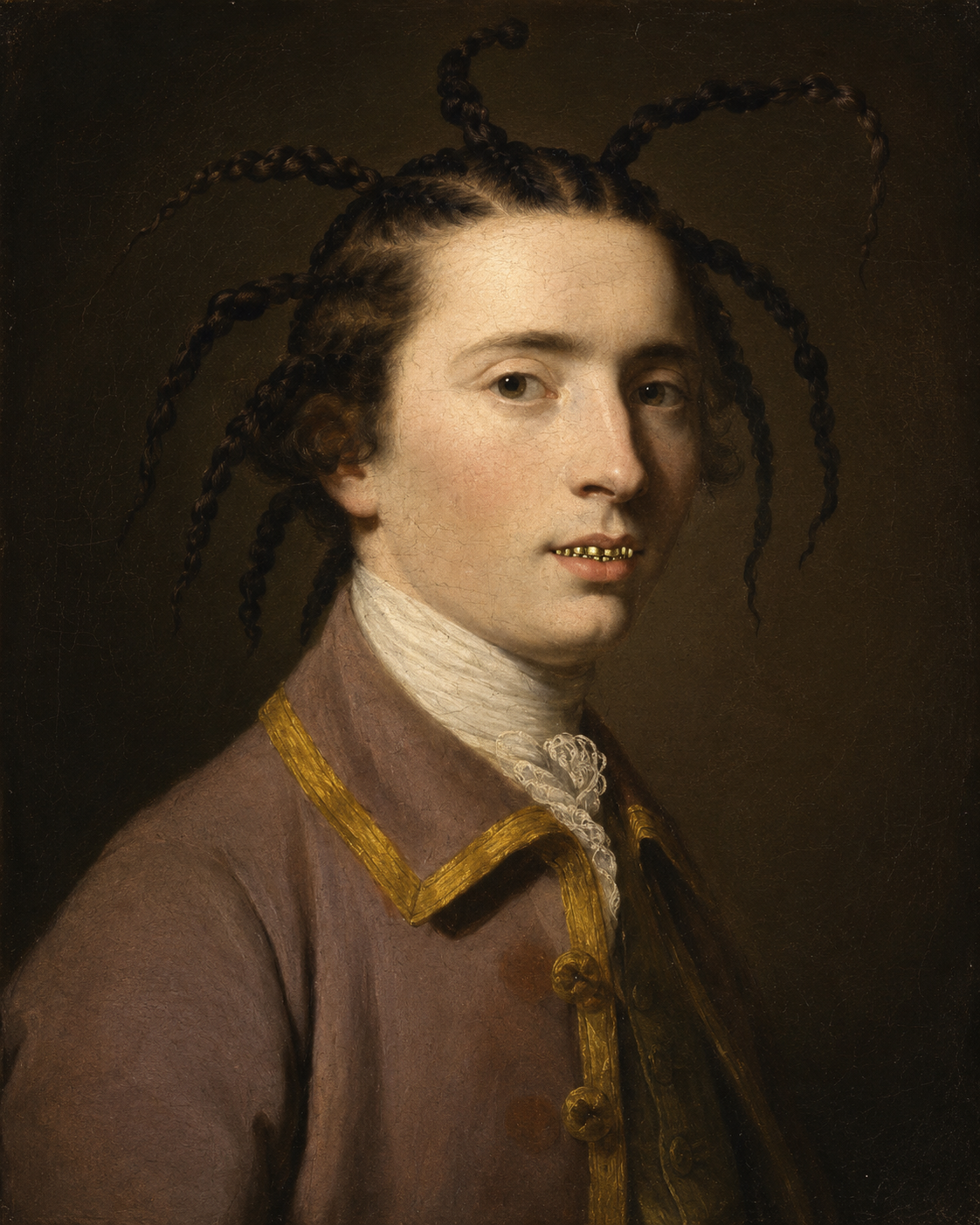
OLD DIRTY BASTARD
Charles Carroll of Carrollton (1737-1832) was born so that his father could steal Washington DC from his brother.
Ok ok. That sentence is an oversimplification to get your attention, but for the most part its true. The land wasn’t Washington DC yet. But it would become the capital during CCC’s lifetime.
Carrollton might have been born for many reasons, but this chapter argues he was only acknowledged by his father as part of a scheme to steal the land. Carrollton is the family celebrity. The only Catholic signer of the Declaration of Independence. The purported wealthiest and oldest surviving signer.
But the memory of Carrollton is highly curated. His biographers are cagey and deceptive about his origins, and try to normalize things that are not normal, even for back then. Not that being normal is a worthy aspiration, unless your entire livelihood required it.
Last chapter was about the black bastard children of CCA and the women who birthed them, including the the woman who birthed the first Moses on the plantation.
This chapter is about the one white son he acknowledged: Charles Carroll of Carrollton.
A Christmas Carol was written by Charles Dickens in 1843, 10 years after Charles Carroll of Carrollton’s death, but the character of the Scrooge could have been based on him. He was notoriously frugal, grumpy and would be visited by many ghosts of his past. Despite the rumored reasons as to why, Charles Carroll of Carrollton probably distinguished himself as Carrollton on the Declaration of Independence, he famously added “Carrollton” to the end of his signature, because of the large number of men with the same name, black and white, who might have just as much claim to his legacy and inheritance as he, given the same grooming and opportunity. The miraculous children, born of the 12 enslaved women who populated the Maryland plantations CCA stole from his brother Daniel, would not get that opportunity. But neither Daniel nor Charles Carroll of Duddington would live to CCC reach the pinnacle of American fame and reverence of their time.
Fatricide (1734)
The way people, especially close family, died for the convenient increase of wealth for CCS and CCA must have felt like divine province. For CCS it was his wife’s ex Anthony, his ex wife, Martha Underwood, and their child Anthony, that died conveniently leaving their will to the underwriter CCS, that solidified his wealth in the colonies. For CCA, it would be his brother, Daniel Carroll of Duddington (1707-1734), and his brother’s son, Charles Carroll of Duddington who died and left his portion of the estate (today prime real estate near the Capitol in Washington DC) to CCA and his son without his knowledge. We don’t know who started it; whether naming his son Charles, when CCA only had black children, was seen as a provocation. But in the end CCA would come out as the victor.
“Daniel wed eighteen year-old Ann Rozer (1710-1764), a well provisioned heiress [who] … brought her husband considerable property, most notably the 1316 acre tract of Prince George’s County land called Duddington Manor that is today the location of the United States Capitol.”
Daniel Carroll’s death at the young age of 26 on April 15, 1734 shortly after the initial Carrollton leases were signed, gave a broader scope as well as additional impetus to CCAs agricultural schemes,” In other words, CCA found a way to take his dead brother’s property. CCDudd was 4 years old when his father Daniel died. CCA’s son Carrollton, and the protagonist of this chapter, would be born 3 years later.
CCA wanted Daniel’s land one way or the other. CCA had plans for Daniel’s land even before he died but when he did die there was nothing in his way. Daniel left clear instructions in his will about how we wanted his land divided and given to his children. The Baltimore Company’s profits were to be cashed in and combined with the land sold, in order to give cash inheritance to his children.
CCA ignored Daniel’s wishes, choosing instead to keep the land as part of his Carrollton development and lent out the cash at significant interest.
Like so many other things in CCA and his father’s life, CCA’s relationship with CCC’s mother was born out of the combination of a death of a family member and his endless ambition. For the time being, I will take Hoffman’s word that “there are no writings from CCA in the 1730s but we see the first evidence of his interaction with Elizabeth (Betty) Brooke at the funeral of his sister Eleanor in 1730.” Seven years later, the two first cousins would have a child.
Baptized Catholic and born a bastard, Charles Carroll of Carrollton’s was not acknowledged by his father, Charles Carroll of Annapolis until he proved to be a worthy heir. CCC was born filius nulius, Latin for child of no-one. By the law of the Maryland colony, CCC was given no rights to inheritance or the financial security that characterized the Carroll family wealth strategy, a law that wouldn’t change until 1788, long after he had signed the Declaration of Independence.
The main priority of CCC and the following generations of Carrolls would be making sure that they are the only bastard children of CCA’s to inherit his money and clout.
The status of Carrollton's birth is possibly evidence of the profound impact of James Carroll’s mentorship on CCA. Towards the end of James Carroll’s life, the CCA and Dr, Charles Carroll, his Protestant cousin, were in contest for the wealth of the “childless” and business savvy priest. Though both benefited greatly from the will, James favored the Catholic CCA. James had unique and very particular demands for the next generation of Carrolls. According to Flanagan, James Carroll felt that “direct children made risky heirs. Carroll’s history demonstrated that no son was sure to be exactly like his father in intelligence, diligence or moral character. But what Flanagan neglects are James Carroll and CCA’s black children, on whom they depended for free labor. Both men took care in their personal estates and in the political direction of the state and colony to make sure their black offspring did not inherit their wealth, and were especially careful to avoid any claims to or demands for acknowledgement, payment or bids for freedom.
CCA’s son CCC (b. 1737) filius nullius status was the solution James would have been proud of. might have been conceived out of his father’s plot to manipulate inheritance of money and land stolen from his young cousins. CCA’s brother, Daniel, had given the land that is now Washington DC, to his son Charles Carroll Duddington, from his personal landholdings. When Daniel died in 1734, at the young age of 26, CCA was put in charge of his estate, and instead of dispersing the money among his nieces and nephews as his brother Daniel had desired, he lent the money at a high interest rate instead, and was slow to ever give any of it to Daniel’s children.
Under British common law, full majority is reached at age 21. Anyone under 21 was legally an infant. However, minors could be landowners, since they could acquire land by gift or inheritance land was never without title, so a father's (Daniel Carroll Duddington) will devising land to a minor (Charles Carroll Duddington) resulted in the minor's immediate ownership regardless of age.
So CCDuddington owned Duddington Manor from age 4, but he couldn't manage it. That's where CCA came in, as the adult male relative appointed to steward the estate. The Stuart Stewart shall we say. CCA was the guardian of property, and as such carried a fiduciary duty. The guardian is supposed to manage assets in the ward's(Charles Carroll Duddington) best interests, not his own. CCA, by lending out the cash at interest and folding the land into his own Carrollton development schemes, was in straightforward breach of fiduciary duty by modern standards.
Inglorious Bastard
Though he was born in 1737, CCC had a trial period before being fully acknowledged by CCA. He wasn’t acknowledged until 1748. By 1748, CCDuddington is approaching majority and will soon be able to demand an accounting of how CCA managed his father's estate for 14 years. CCA has lent out the cash at interest, consolidated the land. He needs a contingency. He formally acknowledges CCC that same year, not out of paternal warmth, but as a legal hedge to keep his nephew’s land.
Unless a person made a will, land in Maryland was distributed in accordance with primogeniture, or descent to the eldest son. The common law held that in the case of land, only descendants, not ancestors, could inherit, and heirs had to be of the full blood. Maryland State Archives
As a bastard, CCC had no right to inherit at common law he was legally filius nullius, nobody's son, with no blood claim. CCA keeping him illegitimate was not negligence; it was a deliberate legal strategy. An unacknowledged bastard could make no claim. Meanwhile, if there were no children or descendants of children, the eldest brother of the decedent inherited all, meaning if CCDuddington died without acknowledged heirs, the Duddington land could flow back toward CCA's line. Maryland State Archives. CCDudd did have a son, who was able to inherit some of his father’s land, the land CCA allowed them to inherit.
Hoffman credits this to CCA’s “unwillingness to bind the future of the family to a single, slender reed” , a strategy given to him by his cousin James. In other words, CCA did not want only one option as a potential heir, by not marrying his mother, CCA (per Maryland inheritance laws) was not bound to her or any of her children with regard to inheriting his fortune. CCA chose to wait to see if CCC was “worthy.” If Hoffman’s guess is right, CCA’s gamble paid off when Charles Carroll of Duddington died in 1773, 6 years after CCC’s return to Annapolis.
CCA’s son, CCC, was sent to Europe in 1748. CCA decided to finally acknowledge CCC as his son when the boy was 11 years old, but his love for his son was not unconditional.
“All letters I have or shall write to you or concerning you to any one are carefully entered in a book so that in case you should be so unfortunate as to return not improved in proportion of the money, time and care laid out on you, they will at least be undeniable testimonies of my attention to your welfare and a constant reproach to you for not corresponding on your part to that attention.”
When Hoffman, CCC’s main biographer, describes CCC ‘being wrenched from his mother’s side and abruptly thrust into a strange foreign world filled with stern, black-robed priests’, he probably failed to see the irony of this description of CCC’s travails, in contrast to the hundreds of African people CCA owned in chattel slavery, many taken from their mothers as children to begin a life of unpaid labor that often resulted in an early death.
While CCDudd was battling for his inheritance and his life, Carrollton was sent to France for boarding school, almost as soon as he was acknowledged, at a now closed Jesuit school called St. Omer in France. CCC was educated in Europe for nearly 19 years (1748- 1767), sharpening his tools to be the best slave trader ever. He would go to four different institutions in France between 1748 and 1759 (St Omer, Rheims, College Louis-le-grand, and a law school in Bourges). He also spent this time with his first cousin, John Carroll, who would become the founder of Georgetown College.
CCDuddington turned 18 in 1747–48. And though 18 didn't give him full legal majority under common law, that came at 21, like it does today. 18 was a threshold of legal discretion for certain acts, and more importantly, it was the age at which a ward could begin to notice what a guardian had done with his estate and start asking questions. The clock was running. CCA had three more years before CCDuddington reached 21 and could legally demand a full accounting.
Trading Places
CCA’s refusal to marry CCC’s mother is significant. When he did marry her in 1757, Carroll might have been concerned about protecting his assets as Maryland enacted more Anti-Catholic laws that almost forced CCA to move the family to Louisiana. CCA made all the arrangements to move, in addition to marrying his baby-mama for inheritance purposes, he settled the lawsuit from his precocious nephew, CCDuddington, and even contacted the French government for permission to live and own land in Louisiana. In 1757, CCA and CCDudd agreed upon a division of lands whereby Charles took Doughoregan and Carrollton while the nephew took other lesser plantations, but when the nephew received the advice of others and had second thoughts, Charles of Annapolis refused to rescind the deal. University of Maryland School of Law. Not coincidentally CCA, finally agrees to marry CCC’s mother, his first cousin to make his son a more legitimate seeming heir.
This is clear undue influence and potentially lack of capacity to contract. CCA was supposed to have fulfilled his brothers wishes. He did not. CCDuddington would battle his entire life to receive his inheritance. CCDuddington would have been around 27–28 in 1757, legally an adult, but CCA had been managing his estate, and psychologically manipulating the family since CCDuddington was 4 years old. The fact that CCDuddington immediately sought to reverse the deal upon getting outside counsel is exactly they type of thing courts look for in undue influence claims: the influenced party reverses course the moment they receive independent advice.
Fortunately for CCA, he benefited from the convenient early death of his nephew CCDuddington in 1773, at the very young age of 44. And CCA, like his father CCS, benefited from the deaths of his nephew and brother, in a way very similar to how his father had benefited greatly from the deaths of his first wife, her 2nd husband and the child CCA conceived with her, to whom they gave the deceased husband's name (Anthony).
CCC’s mother Elizabeth died in 1761, just six years after finally marrying the father of her son. And five years before CCC would return to the colonies. When CCC did arrive back home in Maryland, the same year Kunta Kente the real-life enslaved man turned fictional protagonist of Roots, his father’s plantation was manned and populated by a workforce of his black half-siblings and cousins. And though also a bastard, CCC would immediately enjoy privileges his half-black siblings could not. By the time he moved home, his cousin and aunt Rachel Darnall (CCC’s mother’s sister) and her daughter, Molly (Mary Darnall, CCC double first cousin), had become fixtures in his father’s household. CCA moved in his dead wife’s sister. And in less than a year after the death of his fiancee, Rachel Cook, CCA was now pushing CCC to marry his underage cousin with the same name as his grandmother (Mary/Molly Darnall). CCA gets a law changed to allow CCC to marry the underage Molly and recreate the second marriage of his father, CCS. Though remembered as a humble warrior for religious liberty, CCC would spend the rest of his long life in Maryland, making sure that black people would remain in slavery.
First Citizen
If CCDudd lifelong land disputes with his uncle put him in the sickbed, CCC’s newspaper editorial about the sanctity of personal property put him in the grave. CCDudd must have been overwhelmed.
In 1773, just a month before CCDudd’s death, CCC wasted no time taking his place publicly under the pseudonym the First Citizen. His editorial beef with Daniel Dulaney was one of the things that gave him his founders aura. Leading up the Revolution Charles Carroll of Carrollton instigated a public feud in the form of a editorial dialouge. The editorials became well known as the First Citizen papers. Ironically the writings were anonymous, or so they said.
Daniel Dulany was Maryland's most prominent Protestant lawyer. In 1765, he had written one of the most celebrated pamphlets against the Stamp Act in the colonies, earning him a reputation as the sharpest constitutional mind in Maryland. He was exactly the kind of man who expected deference, especially from a Catholic who couldn't legally hold office. Dulany wrote under the pseudonym "Antilon"likrly his intended spelling of the Spanish antillón, an archaic medical term for a drawing plaster, a poultice used to pull poison from a wound. He saw himself as the antidote to Carroll's arguments, the thing that would draw the papal infection out of the public discourse.
Why would Dulany, the Protestant insider, the establishment lawyer, chose an obscure Spanish medical term almost nobody would recognize? Herein lies CCC strength; being a unclaimed bastard. As a Catholic bastard with black slaves, Carroll was an outsider who has the most inside knowledge. Carrollton had the kind of perspective that black people contribute to discourse, but the white privilege to have an impact. Riley frames this as evidence of Dulany's "broad culture" and superior education. But it also means Dulany was writing past the general public, signaling to a narrow elite audience. Meanwhile Carroll called himself "First Citizen," plain, populist, universal. The name choices alone tell you who was performing mainstream and who wasn't.
Dulany named the Catholic problem explicitly — he taunted Carroll in print about being a "disfranchised Roman Catholic" who had no legal standing to participate. So when he calls himself a drawing plaster, he's talking about how he's trying to pull the Catholic out of the public square.
Carroll's counter-move is elegant and brutal. He doesn't defend Catholicism. He doesn't argue for Catholic rights. He writes about taxation without consent, the most universally Protestant, English, constitutional argument available. He out-Englishes the Englishman. He makes Dulany's own 1765 argument against him. By the end of the exchange the Catholic question has been subordinated to the constitutional one, and Carroll is standing on the winning side of both.
CCC writes under the name "First Citizen" positioning himself as a populist champion of the people against arbitrary government power, arguing that the Governor cannot impose fees without the consent of the legislature, essentially a taxation without representation argument.
There is a deep contradiction here. CCC is the heir to land stolen from his own cousin through decades of CCA's manipulation of guardianship. That land, Duddington Manor, was itself acquired through CCA's breach of fiduciary duty to a 4 year old orphan. The Carroll family wealth he's defending is built entirely on enslaved labor. AND, maybe most importantly, he himself had no legal standing to participate in public life as a Catholic, and especially as a bastard.
So the man arguing most loudly that property cannot be taken without consent is the direct beneficiary of property taken without consent, from his own family, from enslaved people, and soon from the indigenous land itself that would become Washington DC.
Dulany actually taunted Carroll in print about being a "disfranchised Roman Catholic" who had no legal standing to participate, but Dulany was picking the wrong fight. The real vulnerability wasn't Carroll's religion. It was his land, it was his property in slaves. CCDudd knew all about having ones holdings in land be a major vulnerability. And he must’ve been blown away by the arrogance of CCC, his seemingly populist stance.
LATE Registration
The Declaration was adopted July 4, 1776. Most delegates signed it August 2, 1776 — nearly a month later. Carroll was one of those August 2 signers. He wasn't there in July. Maryland sent him as a late addition to the Continental Congress specifically because the vote was close and they needed more bodies.
Catholics were still legally barred from public office in Maryland. Carroll couldn't hold elected office, so he wasn't a delegate in the normal sense, he had to be specially appointed. Second, Maryland itself was late to commit to independence. The Maryland delegation was initially instructed to vote against independence. Carroll was part of the effort to flip Maryland's position.
1784
Carrollton’s life may have started as a property inheritance scheme but it evolved to make whiteness availale for Irish Catholics in the United States, at the expense of black people. His identity was and is an illusion. He was acknowledged by his father To create an heir distinct from his black heir, and distinct for the white heir legally entitled to “his” property. Their status cemented by the status of their mothers. But as CCA’s life began to wind down so did the enslaved people’s acquiescence to the threat of violence to stay silent. Carrollton would do we he had to stop the next generation from rebelling, but he would not be quite as effective as his father from deterring legal action,
Carroll played an integral role in drafting a new state constitution, which was accepted in November, 1776. One month later, Carroll was elected to the state senate in the very manner that he had helped to establish. As senator, he participated in designing the stringent and highly controversial Legal Tender Act in the hopes of increasing currency worth. Passing in 1777, the law required debtors to pay creditors in paper money, essentially devaluing credit held in land and other personal property, thus creating a major financial loss for wealthy landowners. Carroll argued the law was the price to pay for the liberty and protection the Constitution would bring, although the issue caused a significant strain between him and his father.
In 1800, he founded the First Bank of the United States, followed by the Second Bank in 1816. He further invested in the American infrastructure through organizations such as the Potomac Canal Company, Georgetown Bridge Company, and the extremely successful Baltimore Water Company. In 1828, at age ninety, he served on the board of directors for the Baltimore and Ohio Railroad. But no matter how much he accomplished, his accomplishment could not erase the voices of the ghosts that likely haunted him.
For CCS Anthony and Martha Underwood passed conveniently for him to inherit his core landholding. For CCA it was Daniel and Charles Carroll of Duddington who passed conveniently. Also his wife, CCC shortly before he moved her sister in with him. For CCC it was CCA and his wife Molly’s death that left him his vast estate, and their deaths that prompted the beginning of a new life. In 1784 a black child was born and given a literal new life in the midst of this cultural change on the plantations. He will runaway from CCC. The ad placed by CCC will describe him as six feet high, 25 years of age slender made, little knock kneed, flat nose, has a very small under lip, and a large upper one; is very black and speaks quick. However, this description is likely a prejudice description made to invoke discrimination, and inhumanity in the reader toward the subject. Despite the inhumane description from Carrolton, the next generation of enslaved people are more documented for their refusal to comply. The next chapter focuses on the enslaved people who ran away and began suing for their freedom in court, two phenomenon that the record shows are deeply related. And the irony of the founders who had just announced their independence from Great Britain, publicly showing their dependence on their enslaved people.